
NEVER Buy a Table Saw Like This (Most Beginners Do)
My first table saw almost made me quit woodworking. It cut inaccurately, the fence would not stay square, and it felt dangerous to use. That was $150 gone, and it is the same trap a lot of beginners fall into.
This post walks through every trap covered in the video, in order, with the tools that solve each one. That includes the Skil table saw as a budget pick, the DeWALT 8-1/4 inch table saw for tight shops, and the DeWALT 10-inch table saw in the middle. It also covers blade upgrades, dado stack compatibility, featherboards, and the one safety item that belongs next to every saw.
Table Saws Worth Buying for a Beginner Woodworking Shop
1. Skil Table Saw, the Best Budget Table Saw Under $300
If your budget tops out around $300, this is the one to look at. The fence locks down and stays square, which is the single most important thing on a beginner saw. That is exactly what the cheap $100 to $200 saws get wrong.
A wobbly fence is not just frustrating, it is dangerous. If the fence shifts mid cut, your wood can bind and kick back at you. A saw that holds a setting is worth waiting and saving for.
Rip capacity sits around 24 inches, so wide sheet goods will need another plan. It will also accept a dado stack, which not every saw in this price range does. For a first real table saw, this is the best value on the market right now.
See the Skil Table Saw on Amazon Affiliate link. We may earn a commission at no extra cost to you.
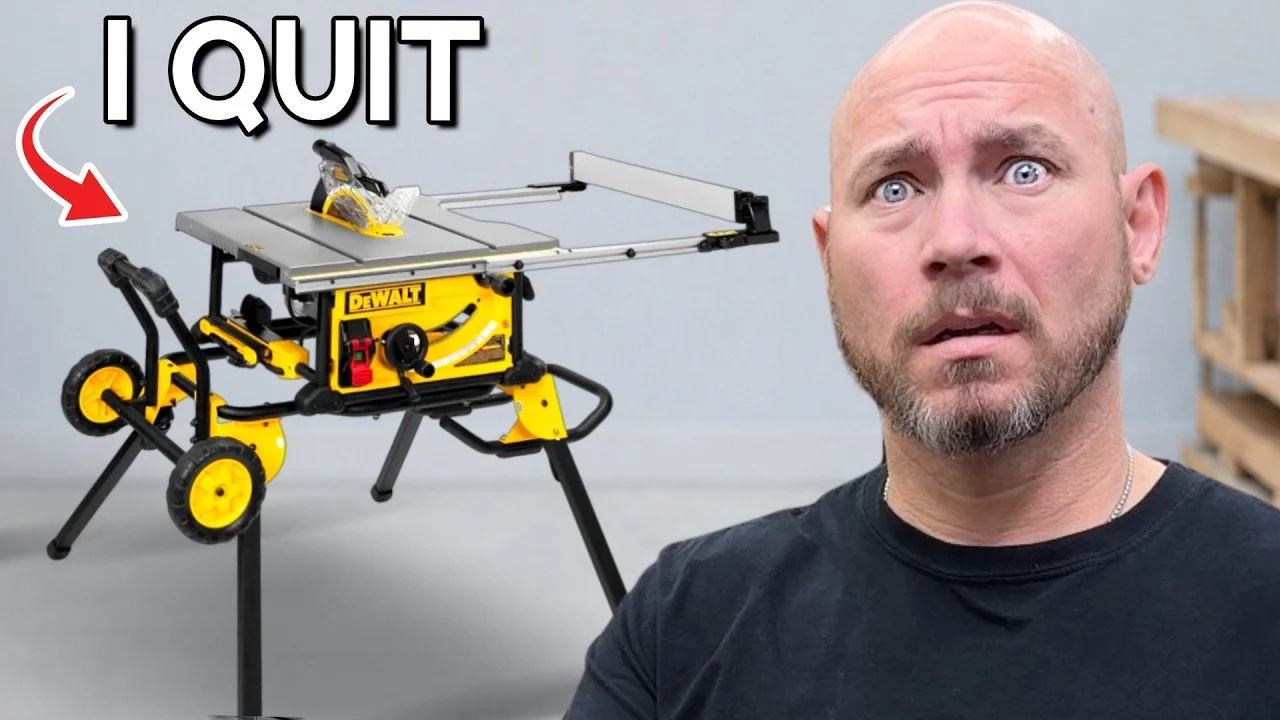
2. DeWALT 8-1/4 Inch Table Saw for Small Shops and Job Sites
This is one of my favorite saws, and it earns its spot in a small shop. It is compact, easy to move, and easy to store when floor space is tight. That portability comes with real tradeoffs you need to understand first.
It is not the most stable saw on its own, even on the matching stand. Set it on a tabletop and it can shift on you during a binding cut. Secure it to whatever surface you use, every single time.
It also will not take a dado stack, because the arbor is not long enough. Rip capacity runs around 24.5 inches, and the smaller blade means less depth of cut. Buy it for portability, not as a do everything saw.
See the DeWALT 8-1/4 Inch Table Saw on Amazon Affiliate link. We may earn a commission at no extra cost to you.
3. DeWALT 10-inch Table Saw, a Solid Option Under $1,000
At roughly $600 to $650, this saw sits in the sweet spot for most home shops. You do not need a $2,000 or $3,000 saw to produce good work. This one will keep a woodworker happy for a long time.
Stability is where it separates itself from smaller jobsite saws. The legs fold out into a wide footprint that stays planted during a cut. That alone removes one of the biggest beginner risks.
You also get 32.5 inches of rip capacity and the ability to run a dado stack. That combination covers sheet goods and joinery without forcing an upgrade later. If your budget stretches this far, it is worth it.
See the DeWALT 10-inch Table Saw on Amazon Affiliate link. We may earn a commission at no extra cost to you.
4. Evolution Table Saw for Buyers Avoiding No-Name Brands
One of the traps in the video is buying a throwaway brand you have never heard of. The price looks right until you need a replacement part. With a no-name saw, that part often does not exist.
Evolution is one of the name brands worth considering for that reason. A 15 amp motor handles walnut, oak, plywood, and pine without complaint. Power is rarely the limiting factor on a name brand jobsite saw.
Buying a known brand also means accessories and support are available years from now. That matters more than most beginners expect. It belongs on the shortlist if you want an option outside the usual two.
See the Evolution Table Saw on Amazon Affiliate link. We may earn a commission at no extra cost to you.
5. SawStop 3HP PCS Table Saw for a Permanent Shop Setup
Cabinet saws solve the stability problem completely. The weight keeps them planted on the floor, so nothing moves while you cut. Everything about the experience is smoother than a jobsite saw.
The 3 horsepower motor is more than most home shops will ever need. Add the blade brake safety system and you have a saw built for long term use. This is a buy once tool, not a stepping stone.
My SawStop gives me 36 inches of rip capacity, which I am glad I have. I wanted 52 inches but did not have the shop space for it. If your shop and budget allow a cabinet saw, I strongly recommend going that route.
See the SawStop 3HP PCS Table Saw at Lowe's Affiliate link. We may earn a commission at no extra cost to you.
6. SawStop 1.75 HP PCS Table Saw for Home Shops
This is the lower horsepower version of the same Professional cabinet saw. It gives you the heavy cast iron platform without stepping up to a 3 horsepower motor. For a home shop, 1.75 horsepower handles hardwood and sheet goods well.
The benefit is the same as any cabinet saw. Weight equals stability, and stability equals accuracy and safety. That is the trade you are making versus a portable jobsite saw.
It is the right pick for a woodworker whose shop is permanent and whose power situation is limited. You still get the blade brake system and the cabinet saw fit and finish. Just be honest about whether you need the extra horsepower.
See the SawStop 1.75 HP PCS Table Saw at Acme Tools Affiliate link. We may earn a commission at no extra cost to you.
Table Saw Blade Upgrades That Fix the Stock Blade Trap
7. Table Saw Blade 2-Pack for Ripping and Crosscutting
This is the trap almost nobody budgets for. The blade on nearly every new table saw is inferior to what you can buy aftermarket. Plan on spending another $20 to $40 the day you buy the saw.
A two pack with a 40 tooth and a 60 tooth blade covers both sides of the work. The 40 tooth is your general purpose blade for ripping and crosscutting. The 60 tooth gives you cleaner crosscuts when the finish matters.
For the price, this pairing is hard to beat for a beginner. It solves the stock blade problem in one purchase. Your cut quality will jump immediately.
See the Table Saw Blade 2-Pack on Amazon Affiliate link. We may earn a commission at no extra cost to you.
8. DeWALT 40 Tooth Table Saw Blade for General Purpose Cutting
The blade on the DeWALT 10 inch saw is a 24 tooth ripping blade. That is a framing blade, and it is fine for splitting a 2x6 down the middle. It is not what you want for woodworking.
A 40 tooth blade is a general purpose blade, which means it handles both rip cuts and crosscuts. That is the range most projects actually need. The difference shows up most on crosscuts.
This one is a nice blade at a fair price, which is the right combination when you are starting out. Buy it with the saw, not six months later. It is the cheapest quality upgrade you can make.
See the DeWALT 40 Tooth Table Saw Blade on Amazon Affiliate link. We may earn a commission at no extra cost to you.
9. Forrest Table Saw Blade for Woodworkers Ready to Upgrade
Forrest makes excellent blades, and the quality is real. They also run about $150 apiece, which is a lot on a $300 saw. That math is why I do not recommend them to beginners.
The right time for a blade like this is after the fundamentals are handled. Your fence should be square, your saw aligned, and your technique solid. A premium blade cannot fix a saw that is out of alignment.
Once you are there, the cut quality is noticeably better and the blade holds an edge a long time. This is a lifetime purchase in a shop that cuts hardwood regularly. Get there in the right order.
See the Forrest Table Saw Blade on Amazon Affiliate link. We may earn a commission at no extra cost to you.
10. Ridge Carbide Table Saw Blade for Hardwood Cutting
Ridge Carbide sits in the same premium tier as Forrest, at a similar price. These are the blades experienced woodworkers upgrade to once they know what they want. They are not a starting point.
If you cut walnut, oak, or maple week after week, the edge retention pays for itself. Fewer sharpening trips and cleaner glue ready edges add up. That is where a $150 blade justifies itself.
For a first saw, put that money toward the saw itself or a better fence. Come back to this blade later. The order of operations matters more than the brand.
See the Ridge Carbide Table Saw Blade on Amazon Affiliate link. We may earn a commission at no extra cost to you.
Table Saw Fence Upgrades for Jobsite Saws
11. SKIL Fence Upgrade for the Skil 10 Inch Jobsite Table Saw
A fence that will not stay square is the root of most beginner accuracy problems. If your cuts drift and you cannot figure out why, the fence is the first suspect. An upgraded fence system fixes it at the source.
This one is built specifically for the Skil 10 inch jobsite table saw. That fit matters, because a universal fence rarely works well on a jobsite saw. Purpose built beats adapted every time.
It makes the most sense if you already own the Skil and want more from it. Rather than replacing the saw, you upgrade the weakest part. That is a smarter path than buying a second saw.
See the SKIL Fence Upgrade at TSO Products Affiliate link. We may earn a commission at no extra cost to you.
12. DEWALT Fence Upgrade for DeWALT Jobsite Table Saws
Same idea, built for DeWALT jobsite saws instead. If you already own the saw and want better repeatability, this is the upgrade path. It keeps your existing saw in service.
Repeatable fence settings are what turn a jobsite saw into a furniture saw. Every joint you cut depends on the fence landing in the same place twice. That is what you are paying for here.
This is best for someone whose saw is otherwise doing the job. If your saw has other problems too, put the money toward a better saw instead. Upgrade the weak link, not the whole tool.
See the DEWALT Fence Upgrade at TSO Products Affiliate link. We may earn a commission at no extra cost to you.
Dado Stacks and What Your Table Saw Needs to Run One
13. CMT Dado Stack for Grooves, Dados, and Box Joints
A dado stack opens up joinery you cannot do with a standard blade. Wider grooves, dados for shelves, and box joints all become simple. That is a big jump in what your saw can build.
Before you buy one, confirm your saw will accept it. The DeWALT 8-1/4 inch saw will not, because the arbor is too short. The DeWALT 10 inch and the Skil will take one.
You will also need a zero clearance throat plate cut for the dado width you use. And on most saws you have to remove the riving knife first. Check both before you spend the money.
See the CMT Dado Stack on Amazon Affiliate link. We may earn a commission at no extra cost to you.
14. Freud Dado Stack for Table Saw Joinery
Freud is one of the most common dado stacks in home shops, and for good reason. The chippers and outside blades give you a clean flat bottom groove. That is what separates a real dado stack from stacking regular blades.
The same compatibility rules apply here. Arbor length decides whether your saw can run it at all. Some saws also have a riving knife that is difficult or impossible to remove.
If you are shopping for a saw and know you want dados later, factor this in now. It is easier to buy the right saw than to work around the wrong one. This is a research trap, not a money trap.
See the Freud Dado Stack on Amazon Affiliate link. We may earn a commission at no extra cost to you.
Table Saw Safety Accessories That Improve Accuracy Too
15. Bow Featherboard for Safer, More Accurate Rip Cuts
When I started out, I did not even know what a featherboard was. It drops into the T slot on your table saw and applies pressure against the fence. That keeps your workpiece from drifting away mid cut.
The accuracy gain is immediate. Your stock stays tight to the fence, so your rip width stays consistent from end to end. That is a real improvement on any saw.
The feathers only bend one direction, which helps resist kickback if the wood pushes back. Featherboards are budget friendly and constantly overlooked. This is one of the cheapest safety upgrades in woodworking.
See the Bow Featherboard on Amazon Affiliate link. We may earn a commission at no extra cost to you.
16. Hedgehog Featherboard as an Alternative Design
There are several featherboard designs on the market, and this is another solid option. The job is the same, which is steady pressure holding your stock against the fence. The difference comes down to how it mounts and feels in use.
Having a featherboard set up before a rip cut becomes a habit quickly. It takes seconds to install and it changes how confident you feel making the cut. That confidence usually shows up in the finished piece.
Pick whichever design fits your saw and your workflow best. Owning one you actually use beats owning the perfect one in a drawer. Just do not skip this category entirely.
See the Hedgehog Featherboard on Amazon Affiliate link. We may earn a commission at no extra cost to you.
17. Bow Xtender Fence for Taller Workpiece Support
Most jobsite fences are short, which is a problem when you stand a workpiece on edge. Tall stock has nothing to reference against and wants to tip. An auxiliary fence face solves that.
Adding height to the fence gives you more surface to keep the piece square. That matters on tall panels and on any cut where the piece is standing up. More support means less wander.
This is a small accessory that removes a specific frustration. If you have ever fought a tall piece against a short fence, you know the one. It is worth having before you need it.
See the Bow Xtender Fence on Amazon Affiliate link. We may earn a commission at no extra cost to you.
18. MicroJig GRR-Ripper Push Block for Table Saw Control
The push stick that comes with most table saws is thin plastic and flimsy. I am not a fan of them, and they are the first thing I would replace. A real push block gives you actual control.
The GRR-Ripper lets you get up and over the blade while keeping your hand well clear. It also holds both the cut piece and the offcut at the same time. That control is what keeps a narrow rip from getting dangerous.
This or a good push shoe belongs on every table saw. You can even make your own out of wood if you prefer. What matters is not using the flimsy stock stick.
See the MicroJig GRR-Ripper on Amazon Affiliate link. We may earn a commission at no extra cost to you.
19. Bow Push Shoe for Safer Narrow Rip Cuts
This is the other strong option in the push block category. The shoe design gives you downward and forward pressure at the same time. That keeps the piece flat on the table and moving straight.
Which one you choose comes down to preference more than performance. Both keep your hands away from the blade while maintaining control. Both beat the plastic stick in the box.
If you cut a lot of narrow strips, this is the accessory that makes those cuts feel manageable. Keep it hanging within arm's reach of the saw. A safety tool you have to hunt for does not get used.
See the Bow Push Shoe on Amazon Affiliate link. We may earn a commission at no extra cost to you.
The Table Saw Safety Item Nobody Wants to Talk About
20. North American Rescue Tourniquet for the Woodworking Shop
Table saws can be dangerous when set up wrong, used wrong, or on a freak accident. This is the tool I think every shop should own and hope to never use. It is a tourniquet, and there are three things to know before you buy one.
First, buy a quality brand. I like North American Rescue, and I have no association with them. We were issued them when I was a trooper, and they work. A cheap one that fails when you need it is worse than nothing.
Second, get trained. In a panic you lose fine motor skills and clear thinking, so muscle memory does the work. Buy two, train with one, and keep the other sealed until you need it. Third, keep it close. I keep one at the miter saw and one at the table saw, and a couple in the truck is not a bad idea.
See the North American Rescue Tourniquet on Amazon Affiliate link. We may earn a commission at no extra cost to you.
Training resources, both free: How to Apply a Tourniquet and the Stop the Bleed online course.
Free Table Saw Upgrades That Cost You Nothing but Time
Two traps in the video do not require buying anything. The first is the stock throat plate insert. Most of them have a wide opening, so offcuts drop in and your cuts come out rougher.
A zero clearance insert fixes that and dramatically cleans up your cuts, especially in plywood. Search your saw model on Etsy along with the words zero clearance insert. People make them from MDF to fit specific saws.
The second free upgrade is setup. Your blade needs to be parallel to the miter slot, and the miter slot parallel to the fence. If you skip this and start cutting, your projects will be off from day one. Worse, misalignment can bind the wood between the blade and the fence and cause kickback. The steps are in your manual, so take the hour before the first cut.
Want deals like these sent to you every day.
Join The Cut List for a free daily tool deal email from Matt.
Browse all current tool deals at 731woodworks.com.
See all tool reviews and every post from the 731 Woodworks blog.
Frequently Asked Questions
What is the best budget table saw for beginners?
The Skil table saw around $300 is the best budget table saw right now. The fence locks down square, which is the single most important thing on a beginner saw. Saws in the $100 to $200 range usually are not worth it. You end up upgrading anyway and losing most of what you paid.
Do you need to replace the blade that comes with a table saw?
Almost always, yes. Most saws ship with a 24 tooth blade, which is a rough ripping blade meant for framing lumber. For woodworking you want a 40 tooth general purpose blade at a minimum. Budget another $20 to $40 for a blade when you buy the saw.
Can every table saw use a dado stack?
No, and this catches a lot of people. The DeWALT 8-1/4 inch saw cannot take one because the arbor is too short. The DeWALT 10 inch saw and the Skil will accept a dado stack. Some saws also have a riving knife that is difficult to remove, which gets in the way.
How much rip capacity do you need on a table saw?
It depends on how often you break down sheet goods. The DeWALT 10 inch saw gives you 32.5 inches, while the Skil and the DeWALT 8-1/4 inch sit around 24 inches. My SawStop has 36 inches and I am glad I have it. If you rip wide plywood often, do not shortchange yourself here.
Is it worth buying a used table saw?
It can be, but never buy one sight unseen. Check that the fence is present, square, and locks down properly. Many older saws use a nonstandard miter slot, so featherboards and miter gauges will not fit. Replacement fences for old saws are hard to find, so a missing fence is usually a dealbreaker.
What safety gear do you need for a table saw?
Start with a featherboard and a real push block instead of the plastic stick in the box. Both improve accuracy and reduce kickback risk. Keep the riving knife installed for standard cuts. I also keep a quality tourniquet within reach of the table saw, and I recommend training with a second one.
Prices and availability were accurate at time of publishing and may change. Always click through to confirm current pricing. Some links in this post are affiliate links. 731 Woodworks may earn a small commission at no extra cost to you.


Kreg invited me inside their Iowa headquarters for a full facility tour. I saw where the jigs get assembled, who owns the company, and why calling their support line gets you a real person.