
Jigsaw Mistakes Most Beginners Make (and How to Fix Them)
Watching on TV? See all tool links from this video
Learning how to use a jigsaw mostly comes down to avoiding 15 common mistakes. They cause crooked lines, splintering, bouncing blades, and broken blades. I'll walk through each one and the fix, using saws like the Kreg KPTJS100A and RYOBI PSBJS01B barrel grip jigsaws.
The Short Answer
- How to use a jigsaw well starts with the blade. A cheap jigsaw with a good blade beats an expensive jigsaw with a bad one.
- Let the saw do the work. Forcing the cut heats the blade and causes deflection and uneven cuts.
- Keep the shoe flat on the material and get the blade up to speed before it touches the wood.
- Match the blade to the cut: low TPI for fast rough cuts, high TPI for fine cuts, thin blades for curves.
- Use the good side down with upcut blades to prevent tear out on plywood.
How to Use a Jigsaw: 15 Beginner Mistakes and How to Fix Them
1. Blaming the Saw Instead of the Blade
If your cut wanders off the line, or the top is on line but the bottom is way off, it's probably the blade. The blade often bends inside the cut where you can't see it until it's too late. A dull or poor quality blade is usually the cause.
Burning and dark marks on the wood point to the same problem. Better blades hold their edge longer. The number one thing I've learned about jigsaws over the years is that the blade matters a lot more than you think.
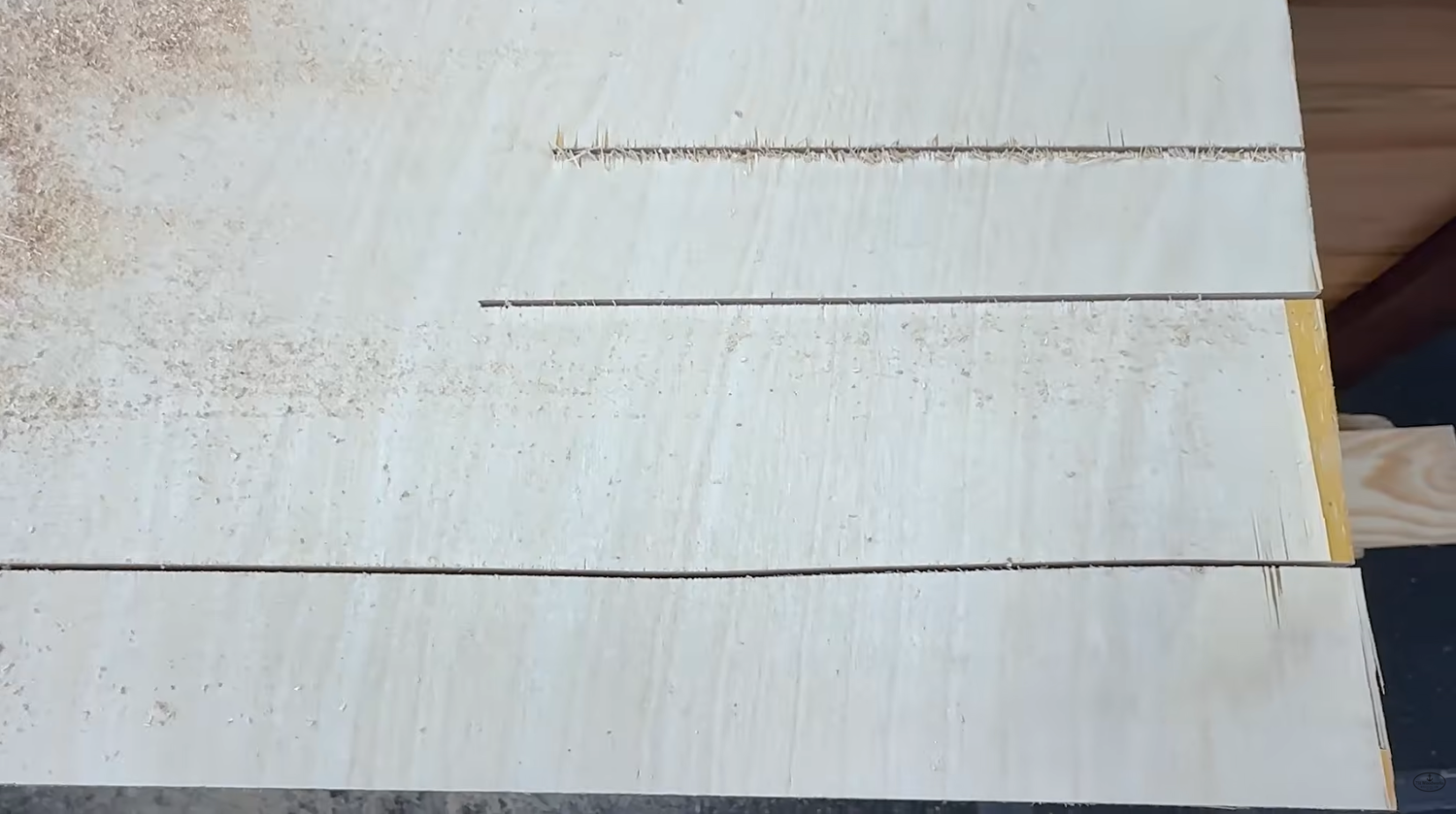
Festool blades are more expensive than box store blades. They've given me some of the best finishes and squarest jigsaw cuts I have ever seen. I first heard about them from King's Fine Woodworking and have been pleased with them since.
See the Festool Jigsaw Blades on Amazon Affiliate link. We may earn a commission at no extra cost to you.
2. Picking the Wrong Blade for the Cut
A wide blade on a curved cut will jump up and down and won't follow the line. Use a thinner blade for curves. A blade that's too short for thick wood bounces off the bottom of the cut and pushes the saw back up.
If the saw struggles, the tooth count may be too fine. Use a lower tooth count for speed and a higher count for detail.
3. Forcing the Cut
Pushing hard heats up the blade, and heat kills blade sharpness. It also strains the saw and drains batteries faster. The blade starts to deflect, so the top of the cut no longer matches the bottom.
If you have to push hard, you either have the wrong blade or the wrong speed setting. Fix one of those two.
4. Leaving the Orbital Setting on Full
Full orbital action gives the most aggressive cut. It also chews up the wood on detailed work. Dial it back toward straight up and down for finer, cleaner cuts.
5. Letting the Shoe Lift Off the Material
The shoe is the flat base of the jigsaw, and it needs to stay flat on the material. Too much pressure on the back, or not enough downward pressure with a downcut blade, makes it pop up. That causes deflection and splintering.
Get the blade up to speed before it touches the material. Starting with the blade against the wood makes it push the saw away.
6. Cutting Plywood Good Side Up
Plywood graded AB or BC has a better side, with A being the best. An upcut blade tears the veneer on the top side of the cut. Keep the good side down when using an upcut blade.
7. Ignoring What's Under the Board
This is the one almost everybody makes at some point. The blade goes below the surface, so know what's under the cut before you start. That includes your hands, your workbench, and the power cord on a corded saw.
8. Clamping Too Far From the Bench Edge
A board sticking way out past the bench flexes and chatters. That makes the jigsaw bounce. Clamp the work close to the edge, especially shorter pieces.
9. Pulling the Saw Out Before the Blade Stops
If the blade is still moving when it touches the work, it can gouge the wood or jump up and break. Let it come to a complete stop before you remove the saw. Do the same when backing out of a curve to reposition.
10. Trying to Whip Around a Curve in One Pass
I'm guilty of this one. Tight curves often take multiple passes, even with a thin blade. Make relief cuts straight from the edge up to the line, like slicing a pie. The waste drops away as you cut, which makes the curve easier to follow.
11. Not Checking the Blade Is Locked In
After a tool free blade change, give the blade a light pull to make sure it's tight. Always remove the battery or unplug the saw before handling the blade.
12. Running a Dirty Blade
Softwoods like pine have sap. Heat bakes it onto the blade as pitch, which dulls the blade faster and leads to uneven cuts. If a fairly new blade stops cutting right, it may just need cleaning.
Simple Green Pro HD is one of the better cleaners I've found for saw blades, router bits, and jigsaw blades. It's inexpensive. Spray it on and scrub with a small brush, and you won't have to keep replacing blades.
See Simple Green Pro HD on Amazon Affiliate link. We may earn a commission at no extra cost to you.
13. Twisting the Saw Into Sharp Corners
Twisting into a tight corner can bend the blade, break it, or make it jump out. Take small bites and work your way into the corner instead.
14. Using a Jigsaw for Long Straight Cuts
Jigsaws aren't designed for long straight cuts across a sheet of plywood. A circular saw, track saw, or table saw handles those better. A jigsaw shines on curves and shorter straight cuts.
15. Skipping Safety Glasses
Jigsaws sling wood chips and dust. You only get two eyes, so wear safety glasses every time. A dust mask is not a bad idea either.
Watch the Full Video
The video shows each mistake happening in real time, including blade bounce, tear out, and the fixes side by side.
Barrel Grip vs D-Handle Jigsaw: Which Should You Buy
All 15 mistakes apply to either style, but the grip changes how the saw handles. A D-handle has the trigger on top and feels like holding a drill. The harder you squeeze, the faster the blade goes. It has traditionally been the most common style on store shelves and is good for powering through rough cuts.
The DeWALT D-Handle Jigsaw (DW331K) is a corded example of this style.
See the DeWALT D-Handle Jigsaw at Lowe's Affiliate link. We may earn a commission at no extra cost to you.
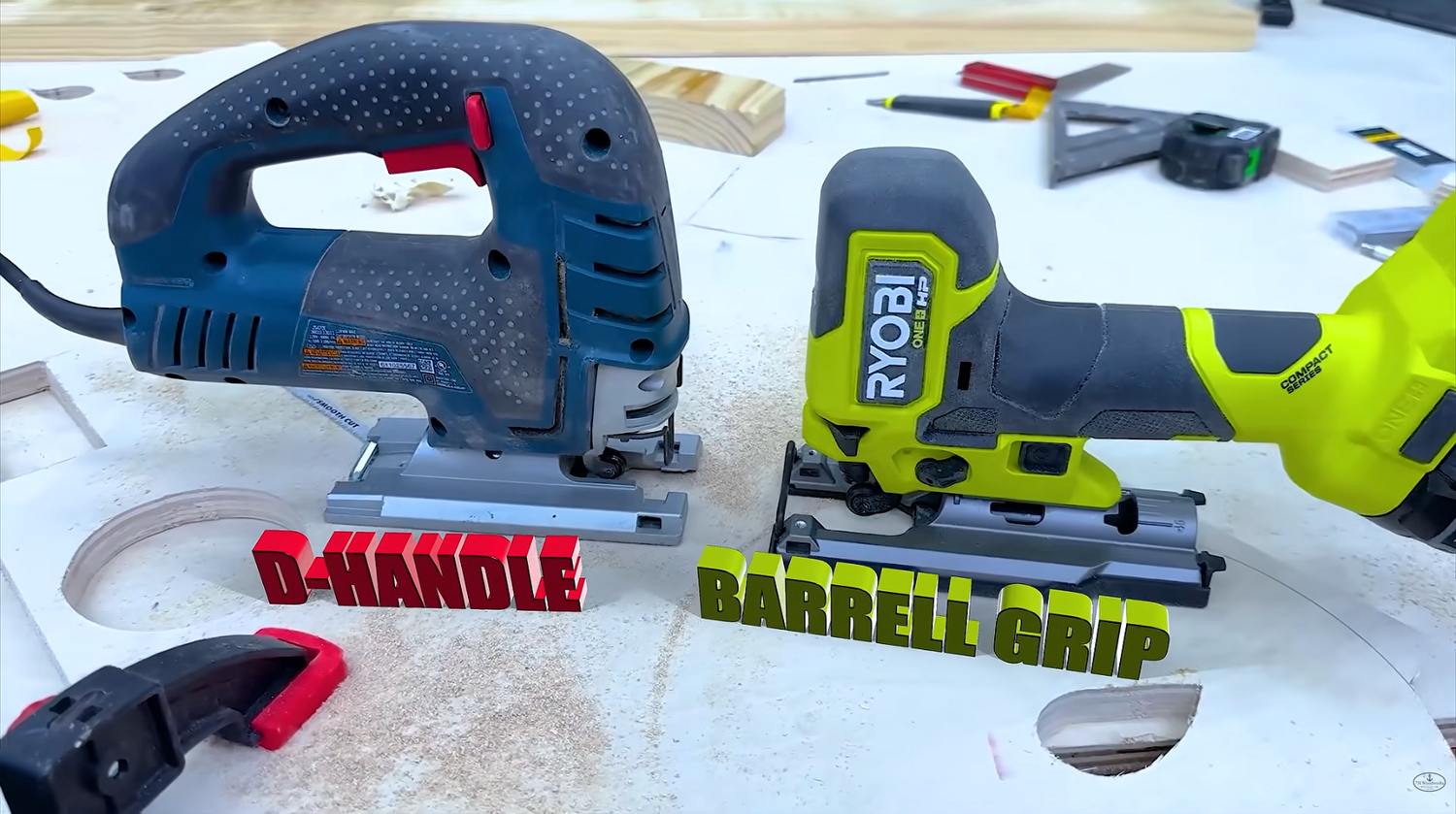
With a barrel grip, you hold the body of the saw. Your hand sits closer to the material for a lower center of gravity. That makes a big difference on curves and tight radius cuts.
Barrel grips usually have an on and off switch instead of a variable trigger, with speed set by a dial. I prefer barrel grips for most woodworking and DIY projects. They're the most versatile in my opinion, and I don't miss the variable trigger.
See the Kreg Barrel Grip Jigsaw (KPTJS100A) at Acme Tools Affiliate link. We may earn a commission at no extra cost to you.
See the RYOBI Barrel Grip Jigsaw (PSBJS01B) at Home Depot Affiliate link. We may earn a commission at no extra cost to you.
What to Look for When Buying a Jigsaw
- Speed dial. Lets you set blade speed for the material.
- Orbital switch. Controls how aggressively the blade moves forward. More orbit cuts faster, straight up and down cuts cleaner.
- Dust blower. Clears dust so you can see your line.
- Anti-mar shoe. A plastic cover on the base that keeps the saw from scuffing your wood.
- Bevel adjustment. Tilts the shoe for beveled cuts. Most modern jigsaws have it.
Cordless or corded comes down to preference. If you're already on a cordless platform, buy the jigsaw for that platform unless it's a weak one. Go corded if you don't want to mess with batteries.
T-Shank vs U-Shank Jigsaw Blades
Jigsaws take one of two blade styles, named for the shape at the top of the blade. My favorite is the T-shank because blade changes are tool free. You flip a lever, drop in the new blade, and it locks in place.
You don't need to match the blade brand to the saw brand. Any T-shank blade fits any T-shank saw, whether you're running a Kreg or a RYOBI.
Best Jigsaw Blades for Clean Cuts
The blade aisle gets confusing fast. Start with tooth direction. Upcut blades leave a cleaner bottom face. Downcut blades leave a cleaner top face. Combination blades have both and try to give you the best of both worlds.
| Teeth Per Inch | Best For | Trade-off |
|---|---|---|
| 6 TPI | Fast rough cuts | Rough finish |
| 10 TPI | All around use | Middle ground on speed and finish |
| 20 TPI | Scroll style detail work | Cuts slower |
Skinny blades handle tighter curves, and wider blades track better on straight cuts. Make sure the blade is long enough to stay below the material on the upstroke. Blades are also made for specific materials like wood, metal, and plastic.
For a good middle of the road option, Diablo makes solid blades. You'll still see a difference compared to the Festool blades, depending on your budget.
See the Diablo Jigsaw Blades on Amazon Affiliate link. We may earn a commission at no extra cost to you.
How to Prevent Tear Out With a Jigsaw
Tear out is the splintering you see along the cut line. Putting the good side down with an upcut blade is the first fix. To protect both faces, you have two more options.
Put painter's tape along the cut line before you cut. Or make a zero clearance plate. Cut a slot in thin acrylic or plywood about the size of the shoe, then attach it with double stick tape. It helps a massive amount with tear out.
11 Jigsaw Tips for Better Cuts
Flip the Blade for Pull Cuts
Flipping the blade around lets you pull the saw instead of pushing it. That's handy for cutting a toe kick or getting close to an edge. Only do this occasionally, since the teeth ride on the blade guide.
Use a Speed Square for Square Cuts
For a square cut on a 2x4, hold a Swanson speed square against the edge and run the jigsaw shoe along it. The square costs less than $10. If you need a lot of square crosscuts, I covered other tools in my post on miter saw alternatives for small shops.
Cut on the Waste Side of the Line
Pencil lines can be thicker than the blade. Cut on the waste side, leave a little of the line, and sand to a perfect fit.
Drill Starter Holes for Cutouts
For an outlet cutout, drill holes in opposite corners and cut from hole to hole. I used to do this a ton for slotted holes and handles with a Forstner bit on each end.
Plunge Cut Without a Hole
Power the saw on and slowly tilt the blade down into the material. Go too fast and it bounces, so take your time.
Cut Notches and Slots
Cut both side lines, then ease into the corner from each side. That's how I cut the notches on a clamp rack.
Slow Down on Plastic
Too much speed on PVC or acrylic heats the blade and melts the plastic. Slow down for cleaner cuts.
Use a Metal Blade on Metal
Metal blades have finer teeth for a reason. A wood blade won't give you the results you want.
Reset the Bevel to Zero
After a bevel cut, set the shoe back to zero. Otherwise your next cut comes out tilted when you aren't expecting it.
Make Templates for Matching Parts
Cut one template with the jigsaw, trace it, and rough cut each piece slightly oversize. Then use a flush trim bit in your router to match the profile every time.
Use a Router for Perfect Circles
Large circles are doable with a jigsaw. For smaller perfect circles, a router with a circle cutting jig is the better tool. Kreg makes a router base with a circle cutting jig built in.
All Tools From This Video
Amazon
- Festool Jigsaw Blades
- Diablo Jigsaw Blades
- DeWALT Jigsaw Blades
- Budget Jigsaw Blades
- Simple Green Pro HD
- Blade and Bit Cleaner
- MicroJig Blade Cleaning Kit
Lowe's
- SKIL D-Handle Jigsaw
- DeWALT D-Handle Jigsaw (DW331K)
- Bosch Corded D-Handle Jigsaw
- Bosch Corded Barrel Grip Jigsaw
- DeWALT 20v D-Handle Jigsaw
- Kobalt D Handle Jig Saw
Home Depot
- RYOBI Barrel Grip Jigsaw (PSBJS01B)
- Milwaukee M18 D-Handle Jigsaw
- Milwaukee M18 Barrel Grip Jigsaw
- Milwaukee M12 Barrel Grip Jigsaw
- RIDGID 18v Barrel Grip Jigsaw
Acme Tools
Rockler
Affiliate links. We may earn a commission at no extra cost to you.Want deals like these sent to you every day.
Join The Morning Cut. Free daily tool deal email from Matt.
Browse all current tool deals at 731woodworks.com.
See all tool reviews. Every post from the 731 Woodworks blog.
Frequently Asked Questions
How do you cut a straight line with a jigsaw?
Start with a sharp, wide blade and set the orbital action low. Keep the shoe flat and let the saw do the work. For short square cuts, run the shoe along a speed square. For long straight cuts, a circular saw or track saw is the better tool.
Why does my jigsaw blade bounce?
The most common causes are a blade that's too short, a wide blade on a curve, or the shoe lifting off the material. Starting the cut with the blade already touching the wood also causes it. Get the blade up to speed first and keep firm downward pressure.
Which side of plywood should face up when using a jigsaw?
With an upcut blade, put the good side down. The upstroke tears the veneer on the top face. Painter's tape on the cut line or a zero clearance plate helps protect both sides.
Do jigsaw blades fit any brand of jigsaw?
Any T-shank blade fits any T-shank jigsaw, no matter the brand. You don't have to buy RYOBI blades for a RYOBI saw. Just match the shank style your saw uses.
Is a barrel grip or D-handle jigsaw better for beginners?
Both work, so it comes down to preference. A D-handle feels like a drill and has a variable speed trigger. A barrel grip puts your hand lower for better control on curves. I prefer barrel grips for most woodworking and DIY projects.
How do you clean a jigsaw blade?
Spray the blade with a cleaner like Simple Green Pro HD and scrub it with a small brush. That removes the pitch that builds up from sappy woods like pine. Always remove the battery or unplug the saw before handling the blade.
Some links in this post are affiliate links. 731 Woodworks may earn a small commission at no extra cost to you.

Most beginners use a jigsaw wrong without realizing it. Here are the mistakes I see most often, and the simple fixes that give you cleaner, safer cuts.