
Watching on TV? See all tool links from this video
Learning how to use a pocket hole jig takes about five minutes, but most beginners use one wrong for years. I made every mistake in this post on jigs like the Kreg 720 (KPHJ720PROL) and the Kreg Rebel (KPTBRB100A). Here are the depth settings, screws, and clamps that fix blowouts, split boards, and tabletops that rock.
The Short Answer
- How to use a pocket hole jig: set it for the thinner board, drill, glue, clamp, and drive a pocket hole screw.
- Set the drill bit about 1/8 inch shallower than the jig recommends. For 3/4 inch stock, I set it to 5/8 inch.
- Measure your wood. My "3/4 inch" plywood measured about 0.68 inch with a caliper.
- Use real pocket hole screws, a face clamp, and wood glue. Drive with a drill on a low clutch setting, not an impact.
How to Use a Pocket Hole Jig Step by Step
Every pocket hole jig comes with recommended settings, and most of them are a little too aggressive. The jig is the easy part. The drill bit setting is where beginners get burned. Here is the process I use no matter which jig is on my bench.
- Measure the real thickness of your board. Plywood sold as 3/4 inch is often thinner. Mine measured about 0.68 inch.
- Set the jig for the thinner board. When you join a thin board to a thicker one, like a table apron, set everything for the thin piece.
- Set the bit stop collar shallower than recommended. I go about 1/8 inch shallower. For 3/4 inch stock that is 5/8 inch. For 1-1/2 inch stock it is 1-3/8 inch.
- Clamp the jig and drill. Use a sharp bit, spin it fast, and hook up dust collection if you have it.
- Square the edges of any boards you are joining edge to edge.
- Add wood glue to the joint.
- Clamp the joint flush with a face clamp.
- Drive a pocket hole screw with a drill and the torque dialed down so the clutch engages.
The depth setting is the step that matters most. Too deep and the screw blows out the face of the other board. My setting is deep enough that the screw still holds, but not deep enough to break through. I use it on the Kreg jig, the Massca jig, and every other jig I own.
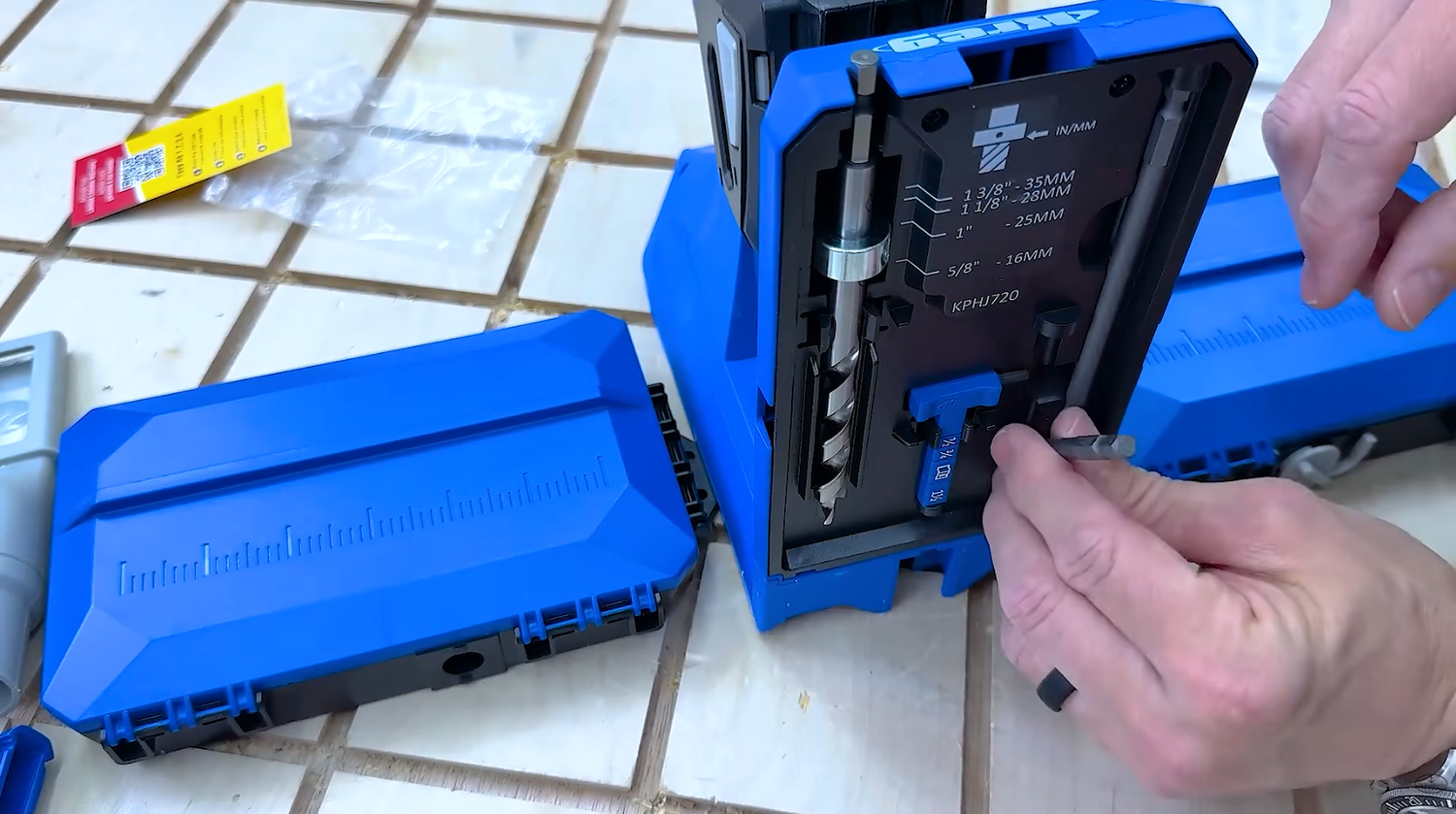
See the Kreg Pocket Hole Bit on Amazon Affiliate link. We may earn a commission at no extra cost to you.
Watch the Full Video
The video shows each mistake as it happens, including a screw blowing out the face of a board and a face clamp keeping a joint flush while I drive the screw.
Why Pocket Hole Screws Break Through the Board
A screw that pokes out the face of the other board is the most common pocket hole mistake. I have done it more times than I want to admit. In my experience, it usually comes down to one of three causes.
The first is bit depth. The jig says 3/4 inch, so you set the bit for 3/4 inch. I have found that to be too aggressive, especially in softwoods like pine and spruce.
The second is trusting the label on your wood. If you set up for 3/4 inch plywood and it is really 0.68 inch, the bit goes too deep. You will see two little holes where the bit came through. Set the bit a little shallower and the problem goes away.
The third is driving the screw too hard. I am as guilty as anybody of using an impact driver on pocket screws. Full power crushes the wood fibers and pushes the screw through. It can also split the board, especially plywood. Use a drill, dial back the torque, and let the clutch stop the screw.
Pocket Hole Screws vs Regular Screws
Never use a regular screw in a pocket hole. The pocket hole bit is a stepped bit. The small tip drills a pilot hole, and the wider section makes room for the screw head.
That wider section leaves a flat shoulder inside the hole. A pocket hole screw has a flat head that seats against that shoulder and pulls the two boards together. That is how the joint works.
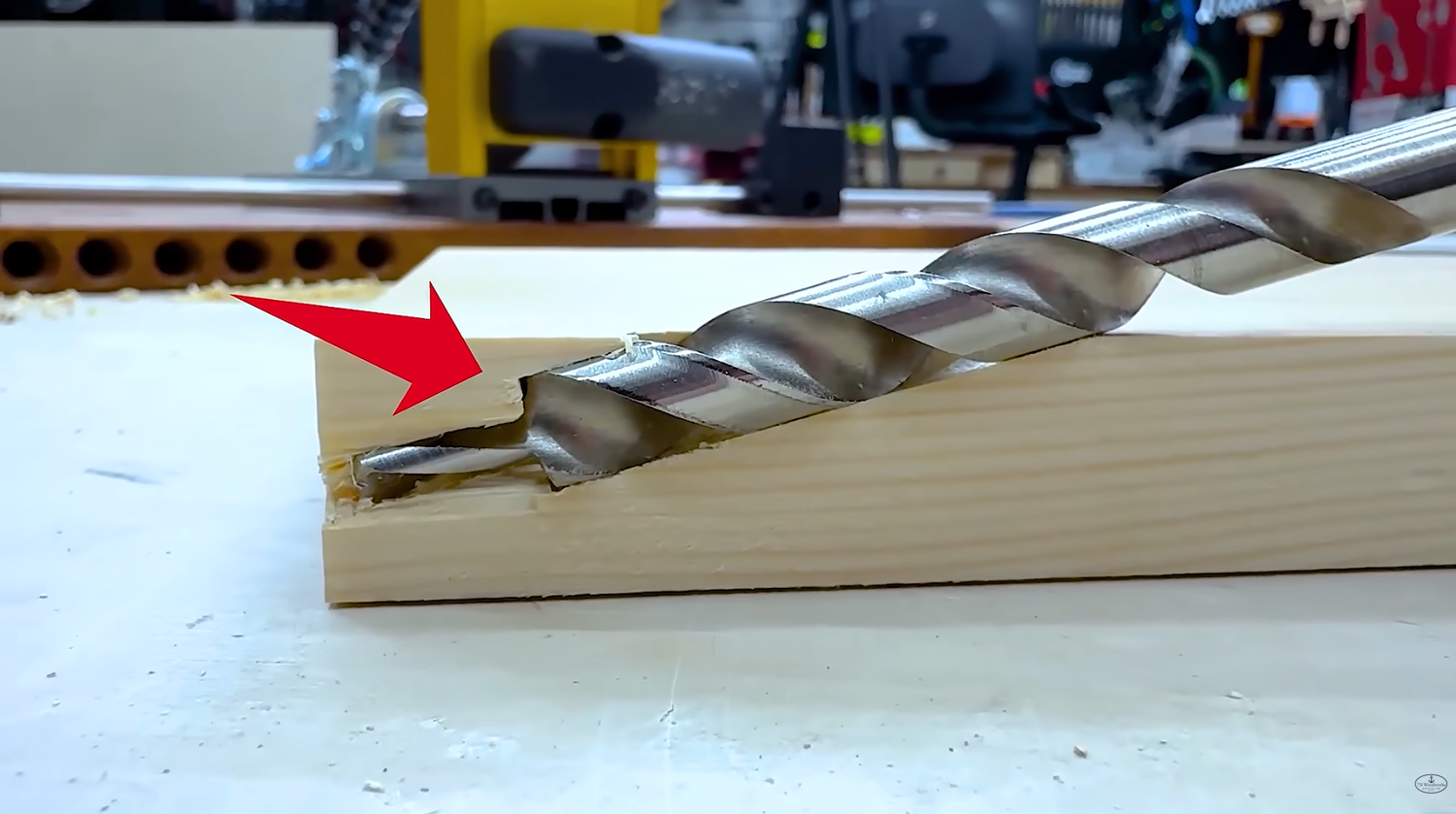
A regular screw has an angled head. It wedges into that shoulder and can blow right through the edge of the board. The joint will not pull tight and it will not be as strong.
Softwood vs Hardwood Pocket Hole Screws
There are three kinds of pocket hole screws. Softwood screws have a coarse thread, with the threads spaced farther apart. Hardwood screws have a fine thread, so use those for maple, walnut, and similar woods. The finer thread holds better in dense wood.
See the Pocket Hole Screw Starter Set at Acme Tools Affiliate link. We may earn a commission at no extra cost to you.
Outdoor Pocket Hole Screws
The third type is the outdoor screw. These usually have a blue coating that keeps them from rusting over time the way plain silver screws do. If the project lives outside, use outdoor screws.
See the Outdoor Pocket Hole Screws on Amazon Affiliate link. We may earn a commission at no extra cost to you.
Best Pocket Hole Jig for Beginners
Every jig below drills a solid pocket hole. The difference is speed, clamping, and how many holes you plan to drill. My old Kreg K5 drilled thousands of pocket holes in my shop before Kreg discontinued it. These are the jigs I would look at today.
| Jig | Clamping | Standout Feature | Best For |
|---|---|---|---|
| Massca Twin | Separate face clamp | Portable, clamps right onto the work | Budget and occasional use |
| Kreg 720 | Auto adjusts to material thickness | Onboard storage, cleaner holes | Regular pocket hole work |
| Massca M2 Pro | Manual, all metal | No plastic parts, optional mounting board | Anyone who wants durability |
| Kreg Rebel | Drop-down feet set thickness | Powered, micro depth adjustment | High volume pocket holes |
Massca Twin Pocket Hole Jig
My first pocket hole jig was a small twin jig very similar to this one. It is just the jig, so you pair it with a clamp, usually a face clamp, to lock it onto the board. It is inexpensive, which is why I started with one.
It is also handy even if you own a bigger jig. When a project already needs one more hole, you can take this jig to the work. The downside is repeatability. Clamping and repositioning for every hole gets old fast on cabinets, tabletops, or frames.
See the Massca Twin Pocket Hole Jig at Faith Valley Tools
Kreg 720 Pocket Hole Jig
The Kreg 720 replaced the K5, and it adds a few nice features. The clamp auto adjusts to the material. Anything from 3/4 inch stock up to a 2x4, you just clamp it and the jig sets itself.
The clamp is not overly tight. There is an adjustment knob, but I would like it to grip a little harder. The support wings are plastic, which I count as a drawback, though mine have held up fine. The wings and the back of the jig store bits and adjustment tools.
In most cases, the 720 drills a slightly cleaner hole than my older jigs. There is less fraying on the edges, especially in plywood.
See the Kreg 720 Pocket Hole Jig at Lowe's Affiliate link. We may earn a commission at no extra cost to you.
Massca M2 Pro Pocket Hole Jig
This is one of my favorite jigs. Everything on it is metal, from the jig body to the clamp to the support wings. If plastic parts on the Kreg bother you, look here.
You set the clamp and the depth by hand. That is not a big deal, because most projects use the same thickness material throughout. You set the front to 3/4 inch, snug the two knurled thumb screws, and go.
The clamp gets as tight as you want. Be careful, because too much pressure can leave a dent in the wood. The optional mounting board is a must-have in my opinion. It holds the jig and stores bits and wrenches magnetically.
See the Massca M2 Pocket Hole Jig at Faith Valley Tools
See the Massca M2 Mounting Board on Amazon Affiliate link. We may earn a commission at no extra cost to you.
Kreg Rebel Pocket Hole Machine
If you drill a lot of pocket holes, the Kreg Rebel is the one to get. It came out last year in a cordless version and a corded version. It adjusts from 1/2 inch material up to 1-1/2 inch.
My favorite feature is the micro adjustment on top for bit depth. That makes the shallower setting I use easy to dial in. Drop-down feet adjust for material thickness, and then it just drills, fast. I did a full breakdown when the Kreg Rebel pocket hole machine first came out.
See the Kreg Rebel Pocket Hole Machine at Acme Tools Affiliate link. We may earn a commission at no extra cost to you.
Are Pocket Hole Joints Strong?
Yes. A lot of people think pocket hole joinery is weak, and they are wrong. Pocket holes are not new either. They are over 100 years old and show up in antique furniture, fine furniture, and cabinetry. The jig is the newer part.
I have built hundreds of projects with pocket holes and had zero issues. My kids still use furniture I built years ago with them. I built a set of 2x4 bar stools with pocket holes and jumped on them at 205 pounds. They held fine.
The one rule is never skip the glue. Pocket holes are good on their own. With glue on every joint, they are really good.
Do You Need a Clamp for Pocket Holes?
You do. If the joint is not clamped while you drive the screw, the boards shift and you end up with an offset joint. A face clamp is the most essential one. Its two flat, pivoting pads hold both boards flush while the screw pulls them together.
See the Kreg Face Clamp at Lowe's Affiliate link. We may earn a commission at no extra cost to you.
See the Massca Face Clamp on Amazon Affiliate link. We may earn a commission at no extra cost to you.
For boxes and cabinets, a right angle clamp helps a lot. It has a 3/8 inch dowel that drops into a pocket hole and locks the panel at 90 degrees while you drive the rest of the screws. I used one on my miter station and my router table.
See the Kreg Right Angle Pocket Hole Clamp at Lowe's Affiliate link. We may earn a commission at no extra cost to you.
Why Your Pocket Hole Tabletop Rocks or Bows
This one had me stumped early on. I built several tabletops that rocked and could not figure out why. The problem was joining factory edges.
Edges on 2x6s and 2x8s are not square from the factory. When the pocket screws pull them together, the panel cups into a U shape. You need to joint the edges square before you join them.
No jointer is no problem. I put a 4-foot level against the table saw fence and cut one edge. Then I flip that cut edge against the fence and cut the other side. Now the edges are parallel. A plywood jointing jig works too, and I built one with MicroJig dovetail bits. Once the edges are square, the panel stays flat.
How to Fix a Pocket Hole Screw That Broke Through
If a screw blows out the face, the board is not ruined. Back the screw out until the tip sits below the surface. Clean up the damage with a sander or light sandpaper.
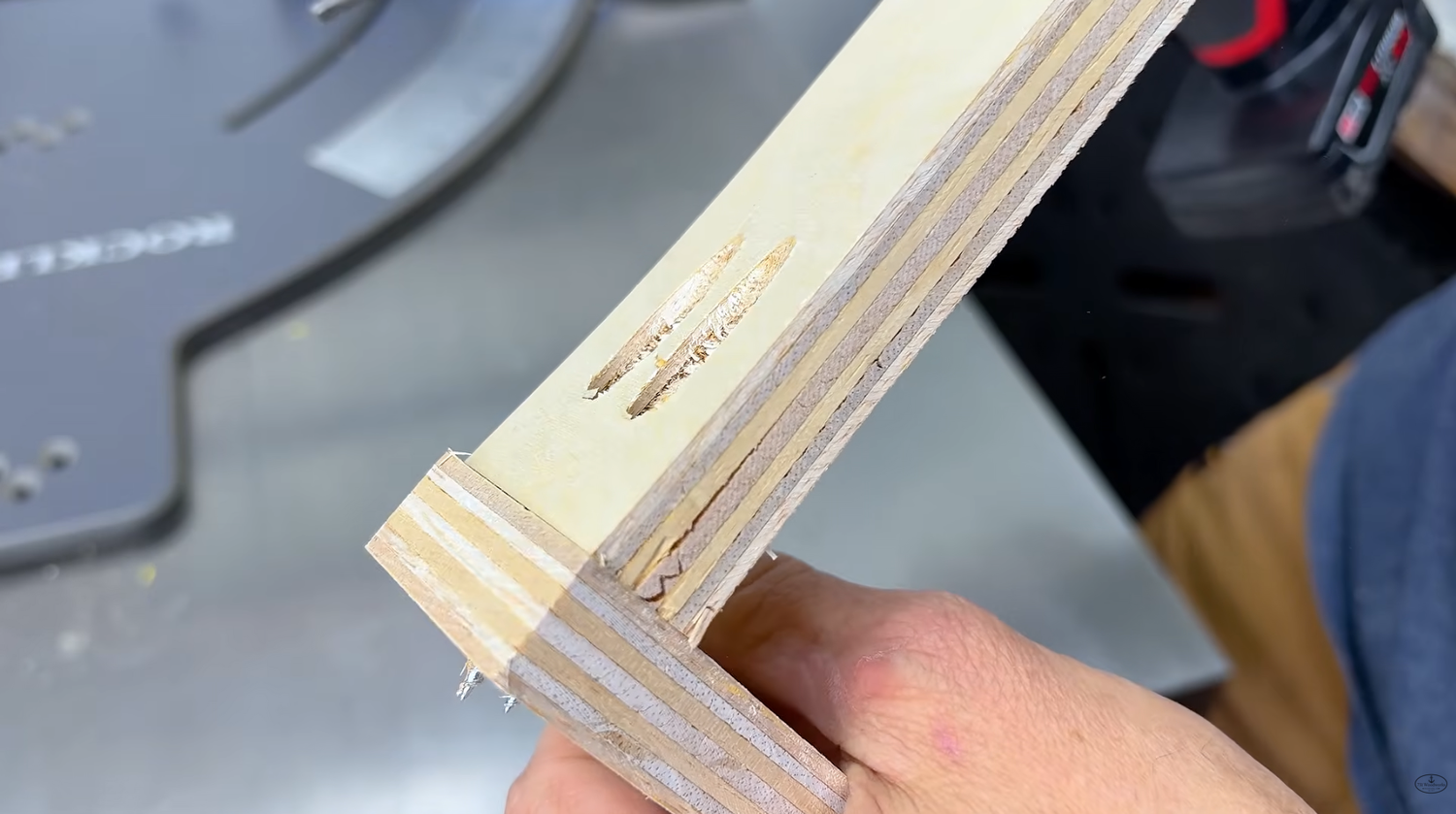
If you are painting, fill it with wood filler and sand it flush. If you are staining, use colored CA glue. Dab some in, hit it with activator, and it dries in about 15 to 20 seconds. Sand it flush and it looks like a small knot that takes stain like a feature.
See the Starbond Knot Filling CA Glue Affiliate link. We may earn a commission at no extra cost to you.
Does Drill Speed Matter for Pocket Holes?
A little. The faster the bit spins, the cleaner the hole. The Kreg High Speed Drill has a boost mode that takes it from 2,000 RPM to 2,500 RPM. Kreg is building tools specifically for woodworkers, which I dug into when I wrote about how Kreg just changed wood joinery.
Will 500 RPM make a massive difference? No. It can make a small one on delicate materials like veneered plywood. I believe some Metabo and Makita drills run faster, while some hammer drills from other brands run under 2,500.
See the Kreg High Speed Drill at Acme Tools Affiliate link. We may earn a commission at no extra cost to you.
Keep Your Pocket Hole Bits Sharp, and Keep a Spare
A dull bit frays the edges and shreds the thin veneer on plywood. Keep your bits sharp. Always keep an extra one too. The tips are brittle, and one drop on the workbench can snap the tip off. Where I live, the nearest pocket hole bit is about 90 miles away, so I order spares online.
Use Dust Collection on Your Pocket Hole Jig
Hook up a shop vac if your jig allows it. Chips packed into the jig make for ugly pocket holes. Clearing them out gives you cleaner holes.
Right Angle Drill Attachment for Pocket Holes in Tight Spaces
If you build with pocket holes long enough, you will need to drive a screw somewhere a drill will not fit. Small end tables are a good example. A right angle drill attachment solves it.
Pair it with a short 3-inch pocket hole driver bit instead of the 6-inch. That saves a lot of space. For pocket hole joinery, I consider it almost mandatory.
See the DeWALT Right Angle Drill Attachment on Amazon Affiliate link. We may earn a commission at no extra cost to you.
All Tools From This Video
Faith Valley Tools
Lowe's
Acme Tools
- Kreg Rebel Pocket Hole Machine
- Kreg High Speed Drill
- Pocket Hole Screw Starter Set
- Shop All Pocket Hole Screws
Kreg
- Shop All Kreg Pocket Hole Jigs
- Kreg 720 Pocket Hole Jig
- Kreg High Speed Drill
- Shop All Pocket Hole Screws
Amazon
- Massca M2 Pro Pocket Hole Jig
- Massca M2 Mounting Board
- Massca Face Clamp
- Kreg Pocket Hole Bit
- Outdoor Pocket Hole Screws
- DeWALT Right Angle Drill Attachment
More Tools
Affiliate links. We may earn a commission at no extra cost to you.Want deals like these sent to you every day.
Join The Morning Cut. Free daily tool deal email from Matt.
Browse all current tool deals at 731woodworks.com.
See all tool reviews. Every post from the 731 Woodworks blog.
Frequently Asked Questions
What depth should I set my pocket hole jig for 3/4 inch plywood?
I set the drill bit to about 5/8 inch, which is between the 1/2 and 3/4 inch marks. Most 3/4 inch plywood is actually thinner. Mine measured about 0.68 inch. The shallower setting still holds well and keeps the screw from breaking through.
Why do my pocket hole screws come out the other side?
Usually the bit is set too deep, the wood is thinner than labeled, or the screw was driven too hard. I set my bit about 1/8 inch shallower than the jig recommends. I also drive pocket screws with a drill on a low clutch setting instead of an impact driver.
Can you use regular screws in pocket holes?
No. Pocket hole screws have a flat head that seats against the shoulder the stepped bit leaves inside the hole. A regular screw has an angled head that can blow through the board. The joint also will not pull tight.
Do you need glue with pocket holes?
Always use glue. Pocket holes are strong on their own, but glue makes them much stronger. I glue every pocket hole joint I build, whether it is a 90 degree joint or edge to edge.
Should you use an impact driver for pocket hole screws?
I do not recommend it, even though I have done it plenty. An impact driver overdrives the screw, crushes the wood fibers, and can split plywood. A drill with the torque dialed down lets the clutch stop the screw at the right spot.
What is the best pocket hole jig for beginners?
On a budget, a small twin jig and a face clamp will get you started. For regular use, I like the Kreg 720 or the all metal Massca M2 Pro. If you drill a lot of pocket holes, the Kreg Rebel is the fastest option I have used.
Some links in this post are affiliate links. 731 Woodworks may earn a small commission at no extra cost to you.

Pocket hole jigs are easy to use and easy to use wrong. Here are the depth settings, screws, and clamps that fix the blowouts, split boards, and rocking tabletops beginners run into.