
MicroJig New Tools for 2026: Sauter Tilting Router Lift, GRR-Ripper Air, and New Router Bits
Watching on TV? See all tool links from this video
I stopped by the MicroJig booth to see what is new for 2026, and Ralph walked me through four new tools. The headliner is the Sauter tilting router lift (SKU MJ-OFL3.0), which MicroJig now sells in the US. Here is what each new MicroJig tool does, what it costs where pricing was given, and where to buy it.
The Short Answer
- The biggest new MicroJig tool is the Sauter tilting router lift. It tilts your router from -5 to 50 degrees, so one bit can cut many angles.
- The GRR-Ripper is now the GRR-Ripper Air. The 100 Air is $59.95, the 200 Air is $79, and the 300 Air is $129.
- Every GRR-Ripper sold from September 1 onward is an Air model with the new air heel.
- Two new router bits round it out: a reverse dovetail bit available now and a wave glue joint bit due mid-October 2026.
- The Sauter lift is sold only through microjig.com.
What's New From MicroJig in 2026
MicroJig showed me four new products. The Sauter tilting router lift is a router lift where the router itself tilts. The GRR-Ripper Air is the first real generational change to the GRR-Ripper in 25 years. The Matchfit reverse dovetail bit is available now, and the FitFinder wave bit is a reversible glue joint bit with a wave profile.
The router lift is the one that blew my mind. The lift is made by Sauter in Germany, and MicroJig is the exclusive US distributor. It tilts from 5 degrees away from the fence to 50 degrees toward the fence. That means a single straight bit can cut a 90 degree rabbet, then lean over and cut angled joinery.
Here is why that matters. Some bits, like a common door pull bit, are designed to cut at a 20 degree angle. Normally you would build a fence that holds the wood at 20 degrees to the bit. With this lift, you tilt the bit to 20 degrees instead, keep your stock flat, and skip that setup.
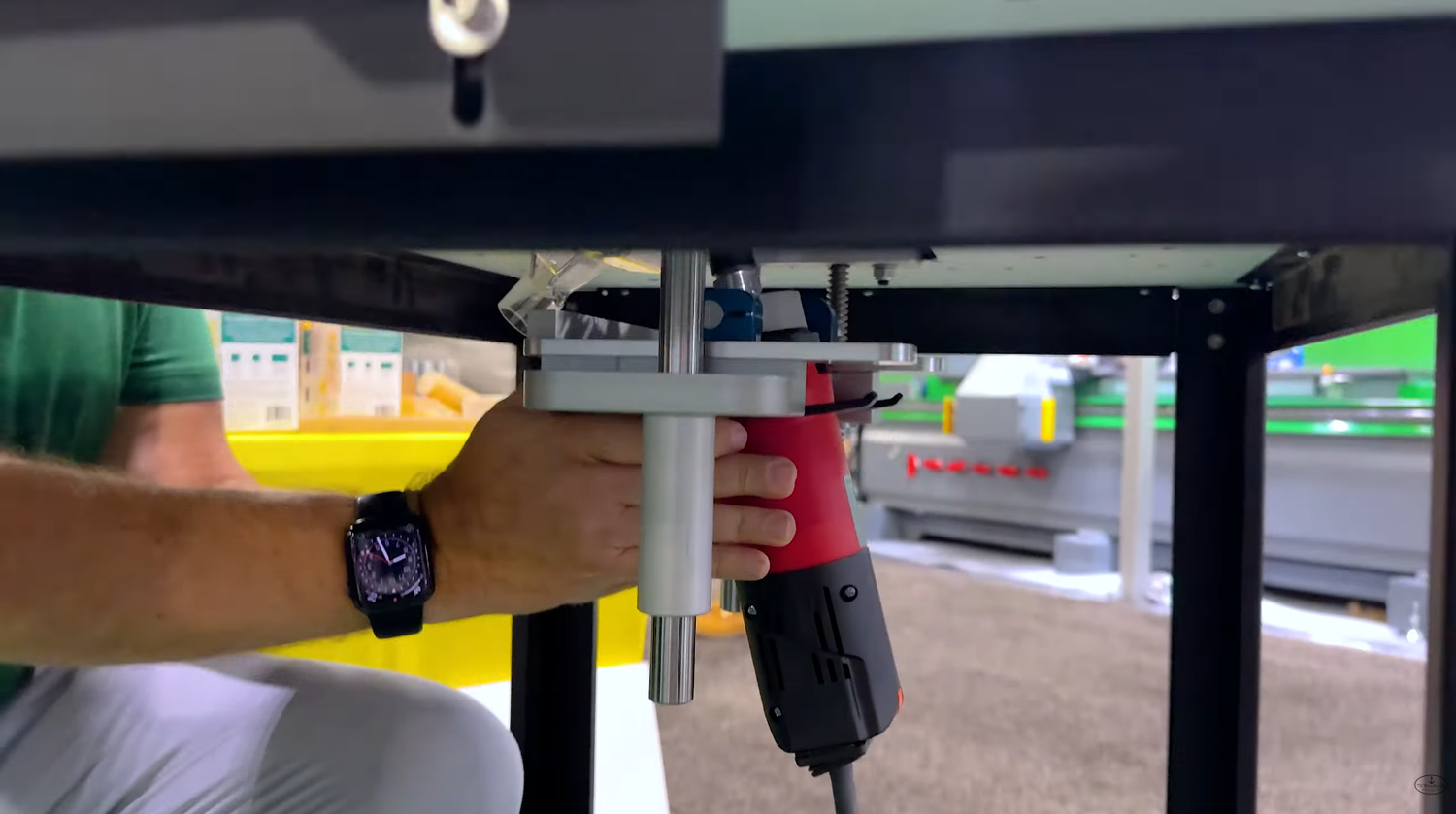
It ships with a Swiss 2 HP motor and all the parts you need. You supply the router table. It uses a standard 9-1/4 by 11-3/4 inch insert, so it fits all the major router table brands.
See the Sauter Tilting Router Lift at MicroJig Affiliate link. We may earn a commission at no extra cost to you.
Watch the Full Walkthrough
The video shows the Sauter lift tilting and re-centering by hand, plus the GRR-Ripper Air heel rolling over the end of a board. Seeing both move makes the design click faster than any description.
MicroJig GRR-Ripper Air: What Changed and How Much It Costs
The GRR-Ripper has been around for 25 years, and the Air is its first major upgrade. The change is the new air heel. It sits slightly lower than the normal TPE grip surface, then squishes up out of the way when you press down on the board.
In the middle of a board, it levels out and grips the same as before. It also helps on rough boards by taking up some of the unevenness. Where it really shines is the end of the board. The heel rolls over the edge and acts as a small heel, which helps when you are cutting thin stock.
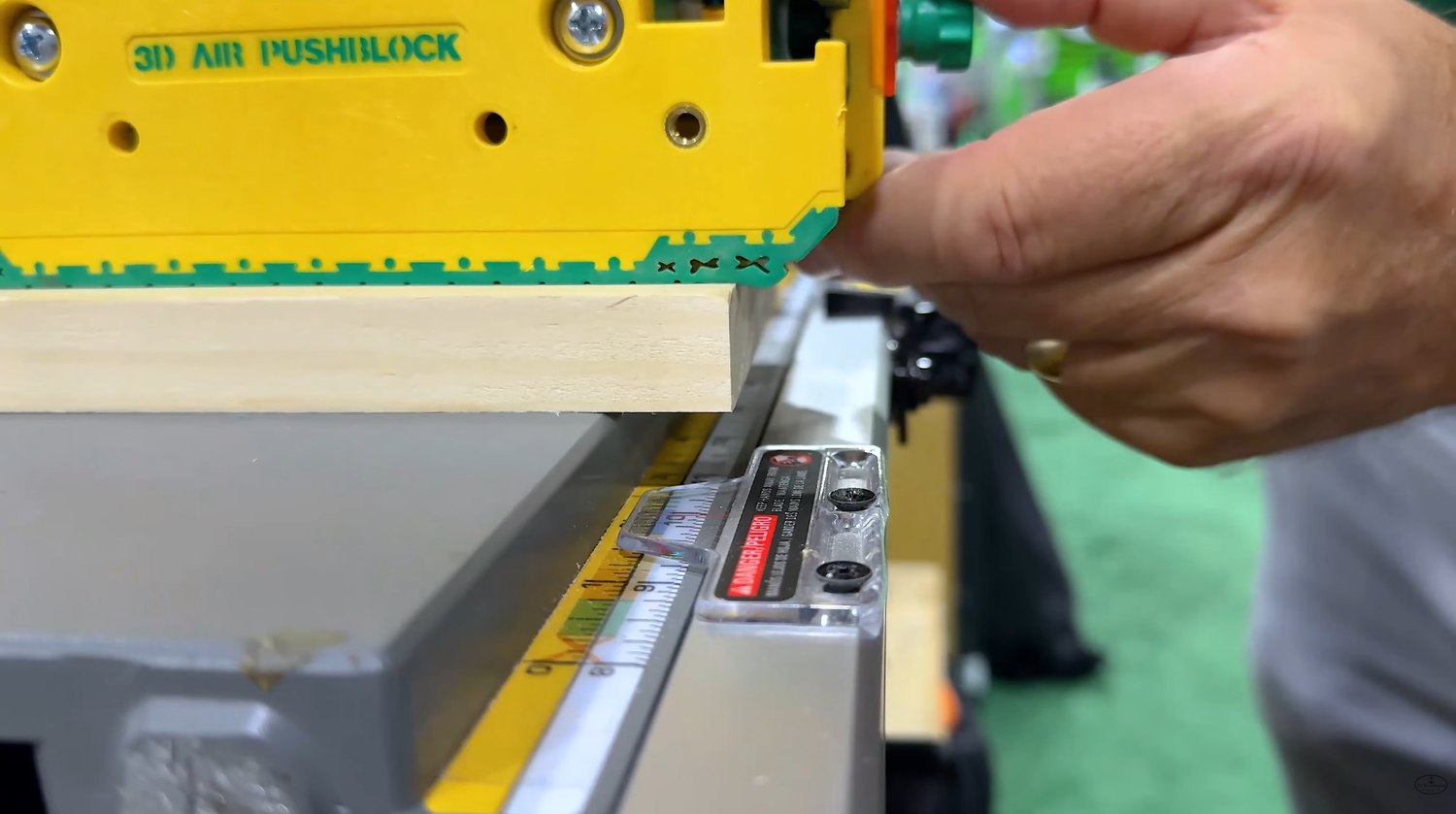
The center leg also has a new extra tunnel. The safe rip index has a matching slot, so you can run the blade down the middle for a very thin offcut. The safe rip rule is the same as before. If your cut is 2 inches, keep the 2 inch mark on the index in the middle or outside, never under the orange.
Every GRR-Ripper sold from September 1 onward is an Air model. Here is the new pricing.
| Model | Price | What You Get |
|---|---|---|
| GRR-Ripper 100AIR | $59.95 | The entry GRR-Ripper with the air heel |
| GRR-Ripper 200AIR | $79 | The 200 with the air heel |
| GRR-Ripper 300AIR | $129 | The 200 Air with all of the accessories |
See the MicroJig GRR-Ripper 100AIR at MicroJig Affiliate link. We may earn a commission at no extra cost to you.
See the MicroJig GRR-Ripper 200AIR at MicroJig Affiliate link. We may earn a commission at no extra cost to you.
See the MicroJig GRR-Ripper 300AIR at MicroJig Affiliate link. We may earn a commission at no extra cost to you.
Sauter Tilting Router Lift (MJ-OFL3.0): How to Tilt and Set the Angle
Tilting it takes no tools. Two black latches under the table unlock the tilt. There are detents at 0, 15, 20, and the other standard angles.
When the router tilts, the bit moves too. Two red knobs at the back slide the router forward and back. That keeps the bit centered in the throat plate at any angle, so you do not need a huge opening.
For angles between the detents, there is a vernier scale for fine increments. Ralph's tip is easier, though. Chuck a straight bit or a 1/2 inch rod and set it with a digital angle gauge. That works for something odd like 9-1/2 degrees.
Segmented Column Joinery With Two Common Bits
The demo piece that sold me was a 20-segment column. Each joint is 9 degrees on each side, and every cut came from the same bit set to 9 degrees. For the splines, Ralph swapped in a slot cutting bit at the same 9 degree setting. That puts the slot perpendicular to the angled face.
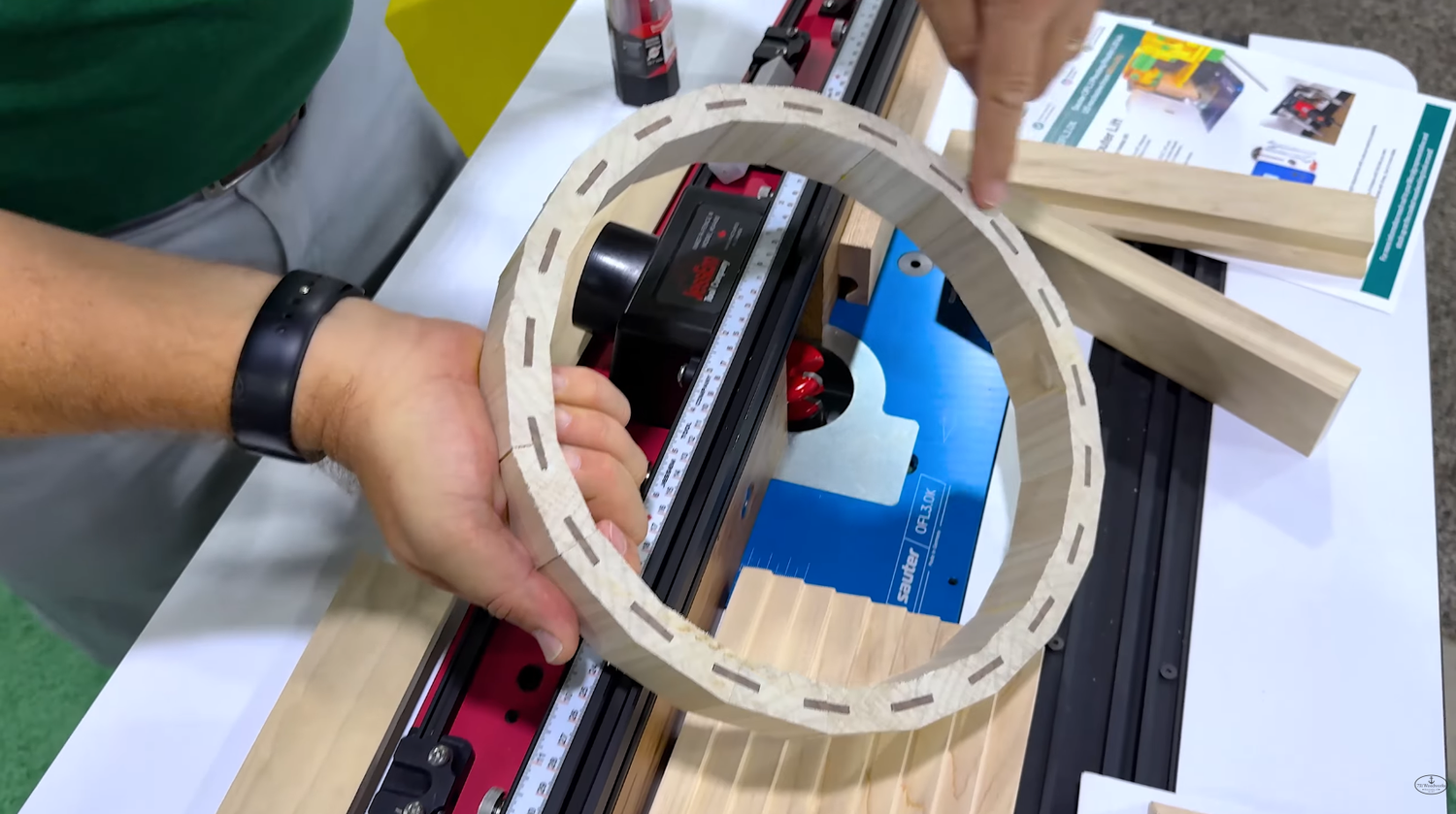
All of that joinery came from two very common bits. That is the whole point of this lift. It makes every bit you already own more versatile. MicroJig is the only place to buy it.
See the Sauter Tilting Router Lift at MicroJig Affiliate link. We may earn a commission at no extra cost to you.
MicroJig Reverse Dovetail Router Bit (MB-025-R1438)
The Matchfit reverse dovetail bit uses the same 14 degree profile and radius flare as the standard Matchfit dovetail bit. The difference is that the head sits below the surface of the material. That lets you build clamping templates from thinner stock instead of the full 3/4 inch a typical dovetail needs.
You can use the template at the router table. You can also flip it over and clamp it to the bench as a sandwich for a handheld router. Either way, the clamp stays out of your path.
MicroJig designed it for clamping, but it turned into a joinery bit too. Pair it with the standard dovetail bit and you get a locking joint. The dovetail goes on top and the reverse dovetail goes underneath. Ralph used that for slide-in trays on a board game table, with a groove about 5/16 inch wide.
Two cuts of the reverse profile also make a slide. Ralph built a drop leaf table support that slides out to hold the leaf. Every part of that slide came from this one bit. It is available now.
See the Matchfit Reverse Dovetail Router Bit at MicroJig Affiliate link. We may earn a commission at no extra cost to you.
See the Matchfit Dovetail Router Bit at MicroJig Affiliate link. We may earn a commission at no extra cost to you.
MicroJig Wave Bit: A Reversible Wave Glue Joint for Cutting Boards
The FitFinder wave bit is a reversible glue joint bit that cuts a wave pattern. The parts interlock like a standard glue joint, but the joint looks good on the end of a cutting board. It comes in two sizes. There is a 1/4 inch shank version with a bearing and a larger 1/2 inch shank version that handles stock up to 1-1/4 inches.
The wave is 2.5 mm, and you lose only 5 mm of material per joint. That is less than 1/4 inch. You cut both edges with the same setup and flip every other board so they align.
MicroJig says the joint gives about 60 percent more glue surface than a straight joint. The faces also stay within sanding distance, so you do not have to plane the top down. The smaller bearing bit can follow templates for curved wave parts too.
Both bits have the patented center platform that works with FitFinder. The setup is offset by one wave to make the joint reversible. You do not measure, mark, or make test cuts. It sets up right the first time. The wave bits are due mid-October 2026.
See the FitFinder 1/2 Gauge at MicroJig Affiliate link. We may earn a commission at no extra cost to you.
All Tools From This Video
MicroJig: Router Lift
MicroJig: Router Bits and Setup
- Matchfit Reverse Dovetail Router Bit
- Matchfit Dovetail Router Bit
- FitFinder 1/2 Gauge
- FitFinder Wave Bit, 1/4" and 1/2" shank (available mid-October 2026)
MicroJig: GRR-Ripper
- MicroJig GRR-Ripper 100AIR
- MicroJig GRR-Ripper 200AIR
- MicroJig GRR-Ripper 300AIR
- MicroJig GRR-Ripper ReNew
MicroJig: Matchfit
MicroJig: Everything
Affiliate links. We may earn a commission at no extra cost to you.Want deals like these sent to you every day.
Join The Morning Cut. Free daily tool deal email from Matt.
Browse all current tool deals at 731woodworks.com.
See all tool reviews. Every post from the 731 Woodworks blog.
Frequently Asked Questions
What is the new MicroJig GRR-Ripper Air?
It is the first major upgrade to the GRR-Ripper in 25 years. The new air heel squishes flat mid-board and rolls over the end of the board as a small heel. The center leg also has a new tunnel for thin offcuts. Every GRR-Ripper sold from September 1 onward is an Air model.
How much does the GRR-Ripper Air cost?
The GRR-Ripper 100 Air is $59.95. The 200 Air is $79. The 300 Air is $129, and it is the 200 Air with all of the accessories.
What angles does the Sauter tilting router lift tilt to?
It tilts from 5 degrees away from the fence to 50 degrees toward the fence. There are detents at 0, 15, 20, and other standard angles. A vernier scale handles fine increments. For odd angles, I would set it with a straight bit and a digital angle gauge.
Will the Sauter router lift fit my router table?
It uses a standard 9-1/4 by 11-3/4 inch table insert, so it fits all the major router table brands. It comes with a Swiss 2 HP motor and everything else you need. You only supply the table.
Where can I buy the Sauter tilting router lift?
MicroJig is the exclusive US distributor. The only place to buy it is microjig.com. It is also offered as part of the MicroJig Ultimate Router System.
When is the MicroJig wave bit available?
The FitFinder wave bits are due in mid-October 2026. They come in a 1/4 inch shank with a bearing and a 1/2 inch shank for stock up to 1-1/4 inches. Both work with the FitFinder setup system.
Some links in this post are affiliate links. 731 Woodworks may earn a small commission at no extra cost to you.


I stopped by the MicroJig booth and saw a router lift that tilts from -5 to 50 degrees, the new GRR-Ripper Air, and two new router bits. Here's what each one does and what it costs.