
Buying Wood for Beginners: A Simple Guide to Choosing, Storing, and Using the Right Lumber for Your Projects
If you’re new to woodworking, buying wood can feel overwhelming — hardwood, softwood, live edge, kiln-dried, board feet — it’s enough to make your head spin. I remember feeling the exact same way when I first started out. I thought that if I picked the wrong wood, my project was doomed from the start.

But here’s the truth: most woodworking projects don’t fail because of the type of wood you pick. They fail because of bad joinery, rushing the job, or not understanding how to handle and store wood properly. Once you learn a few basics, wood selection gets a whole lot easier — and a lot more fun.
In this post, I’ll walk you through how to buy wood for woodworking, where to find good lumber (even at Home Depot or Lowe’s), how to store it right, and what you need to know about wood movement, plywood, and more.
Affiliate Disclosure
This post contains affiliate links, which means I may earn a small commission if you buy through them—at no extra cost to you. It helps keep the tool deals coming, so thanks for your support! Prices are valid at the time of posting but are subject to change at any time.
Watch The Full Youtube Video Here: I Fell for the Biggest Woodworking Mistakes Out There!
Tools & Resources Mentioned in This Post
Understanding Wood Types: Softwood vs. Hardwood
One of the first things beginners struggle with is understanding the difference between softwood and hardwood.
Softwoods come from evergreen trees like pine, spruce, and fir. They’re usually more affordable and easier to cut and sand.
Hardwoods come from deciduous trees like walnut, oak, cherry, and maple. They’re denser, more durable, and often used for fine furniture.
But here’s the key takeaway: pine is fine.
Don’t let anyone tell you that pine isn’t “real woodworking material.” I’ve built dining tables, dressers, and end tables out of common southern yellow pine that are still in use years later. Pine can be affordable, beautiful, and long-lasting — especially when sealed and finished properly.
Where to Buy Wood (and Why Home Depot Is Okay)
There’s a lot of chatter online about avoiding big-box stores for wood, but I’m here to tell you — it’s perfectly fine to buy wood from Home Depot or Lowe’s.
You’ll just need to take time to sort through the boards:
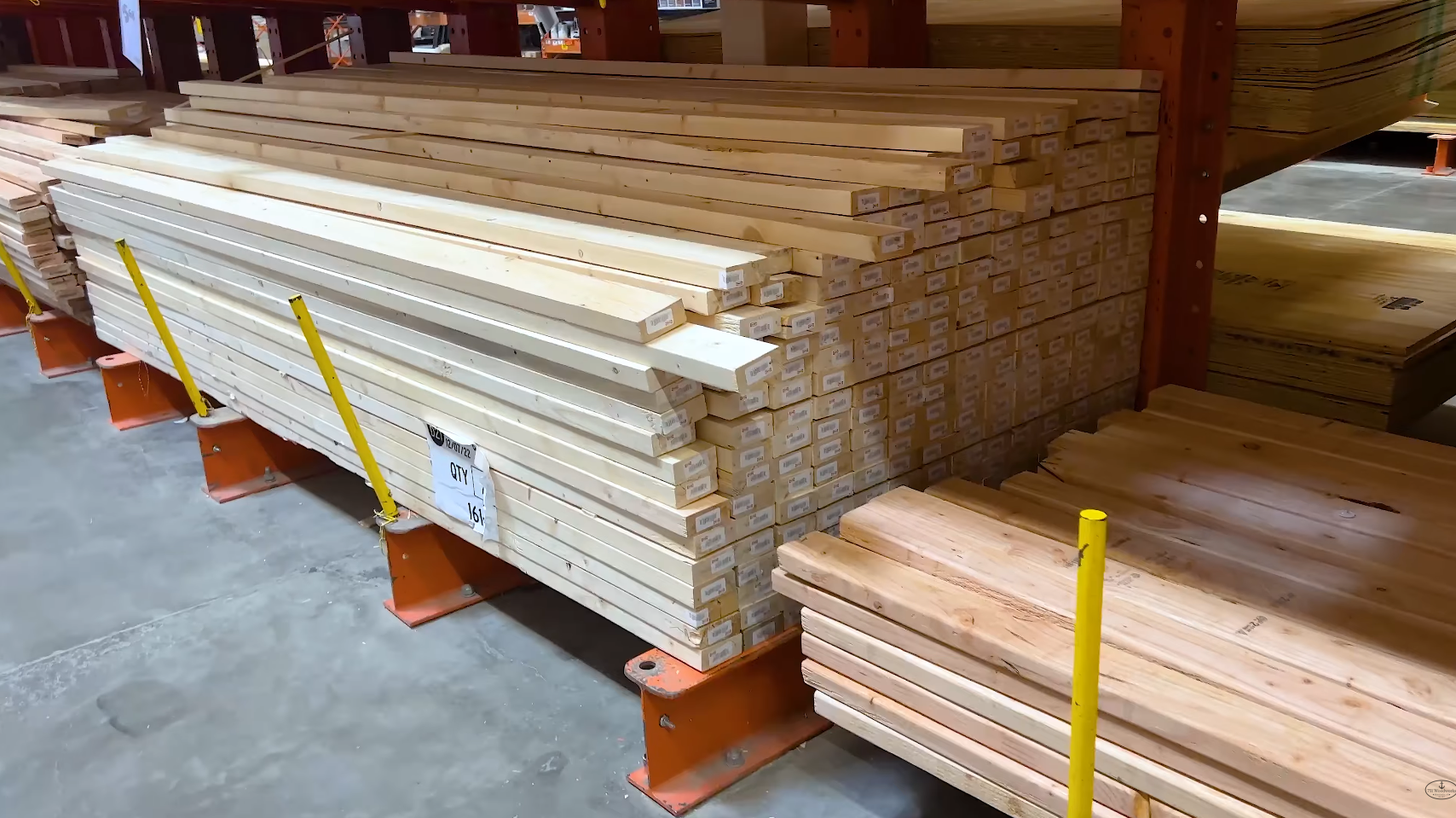
Sight down each board to check for twists or bows.
Avoid cracks or large knots unless you want them for character.
Skip any boards with a bullseye pattern (that’s the tree’s center, or pith).
If you’re careful, you can find great lumber for furniture projects right in the home improvement aisle.
Hardwood Shopping Tips
When you’re ready to step up to hardwoods, don’t be intimidated. Wood is wood — your blades and sanders will handle maple or walnut just fine.
Hardwoods are often sold by the board foot, which is based on the board’s thickness, width, and length. You can use this free Board Feet Calculator to estimate your cost before you buy.
Common hardwood terms to know:
4/4 (four-quarter) = about 1 inch thick
6/4 (six-quarter) = about 1.5 inches thick
8/4 (eight-quarter) = about 2 inches thick
S2S, S3S, S4S = surfaced 2, 3, or 4 sides (the more sides surfaced, the less work for you)
Kiln-Dried (KD) = dried in a machine to remove moisture
Air-Dried = naturally dried outdoors over time
If you’re just getting started, I recommend Rockler Hardwood . They sell 3/4" boards in walnut, maple, and cherry — all excellent for beginner projects.
Buying Wood Online Made Easy
If you don’t have a local hardwood dealer nearby, buying online is a great option.
I’ve partnered with Ol Loggin Sawmill to make this easy.
They offer ready-to-use woodworking kits that include:
Live edge serving tray blanks
Cutting board kits in walnut, maple, or mixed species
Optional Epoxy for those beautiful river-style trays
Every photo on their site shows the exact kit you’ll receive, so you know exactly what your wood grain and live edge will look like.
Choosing the Right Plywood and Sheet Goods
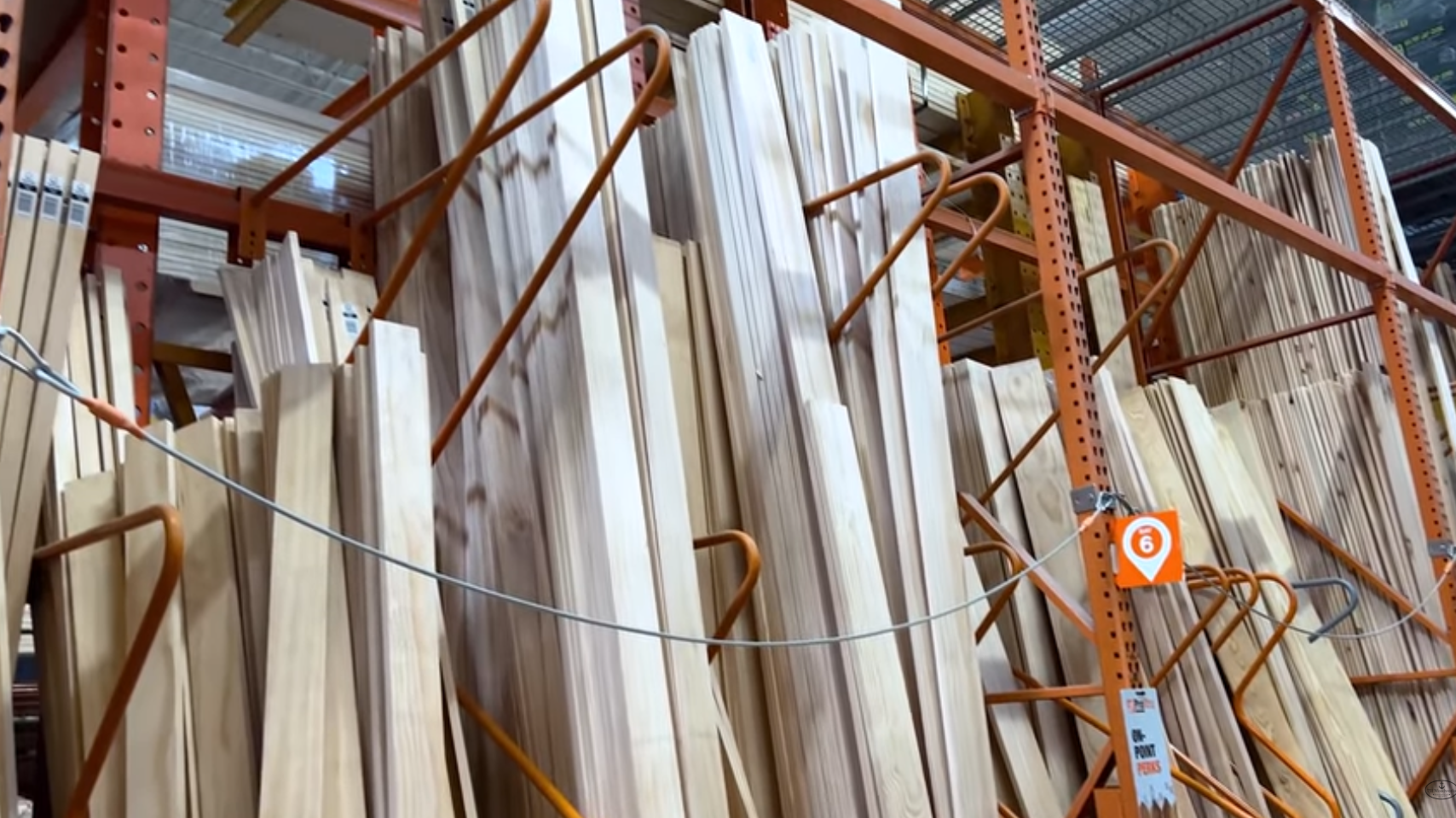
When you walk into the lumber aisle and see all those stacks of plywood, it can be confusing. Here’s a breakdown:
Sanded Birch Plywood – smooth and ideal for cabinets or furniture.
Baltic Birch – top-tier quality with more layers, stronger edges, and no voids.
CDX Plywood – construction-grade, cheaper, and best for shop jigs or rough work.
MDF – smooth and flat but heavy and not moisture-resistant. Use it for templates, not furniture.
Tip: Always inspect plywood edges for voids or delamination — signs of poor-quality glue or water damage.
Wood Storage Tips for Beginners
Proper storage can save you a ton of frustration down the road.
Never store wood directly on concrete — it absorbs moisture. Use scrap wood to raise it off the floor.
Avoid direct sunlight — uneven heat will warp boards.
Keep consistent support underneath to prevent sagging.
Store thicker boards vertically or use a Bora Lumber Rack to keep things organized and straight.
How Long Should Wood Acclimate?
Wood needs to acclimate to your shop environment before you build with it.
Let it rest for at least 48 hours, ideally a week or two if it was shipped or stored elsewhere. This allows the wood to adjust to your temperature and humidity so it doesn’t warp or crack after your build.
Outdoor Wood Projects: What to Use and How to Protect It
Pine can absolutely be used outdoors if you seal it properly. I use Cabot Australian Timber Oil and my outdoor furniture still looks great years later.
Other excellent outdoor woods include:
Cedar
Redwood
White oak
Teak
Cypress
They cost more, but they naturally resist weather and insects.
Safety First: Dust and Health
Wood dust — especially from hardwoods like walnut or exotic species — can be irritating or even harmful. Always wear a Dust Mask or use proper dust collection. Keeping your lungs safe is one of the smartest habits you can build early on.
Final Thoughts: Don’t Let Fear Stop You
Buying wood doesn’t have to be scary. Whether you’re buying pine at Lowe’s or a live edge slab from a specialty store, the most important thing is to just start building.
Pine is fine.
Hardwood is great.
Buying from Home Depot is okay.
Online wood kits make it simple.
You’ll learn more by cutting, sanding, and building than you ever will by overthinking your wood choices.
If you found this helpful, check out my Woodworker 101 series for more beginner tips and join my Woodworking Coaching Community on Skool to grow your skills and confidence.
Stay safe, have fun, and as always — big ol’ virtual fist bump from me to you.


I stopped by the MicroJig booth and saw a router lift that tilts from -5 to 50 degrees, the new GRR-Ripper Air, and two new router bits. Here's what each one does and what it costs.