
Mastering the Router: 5 Beginner Mistakes You’re Probably Making (And How to Fix Them!)
If you’re new to woodworking, there is one tool that probably intimidates you more than any other: the router.
I’ll be the first to admit it—when I started, I was more scared of the router than anything else in the shop. Between the high-pitched scream of the motor and that scary potential for kickback (which I’ve definitely had happen), it’s enough to make anyone hesitant. But here’s the truth: once you understand how a router works, it becomes one of the most versatile and essential tools in your shop.
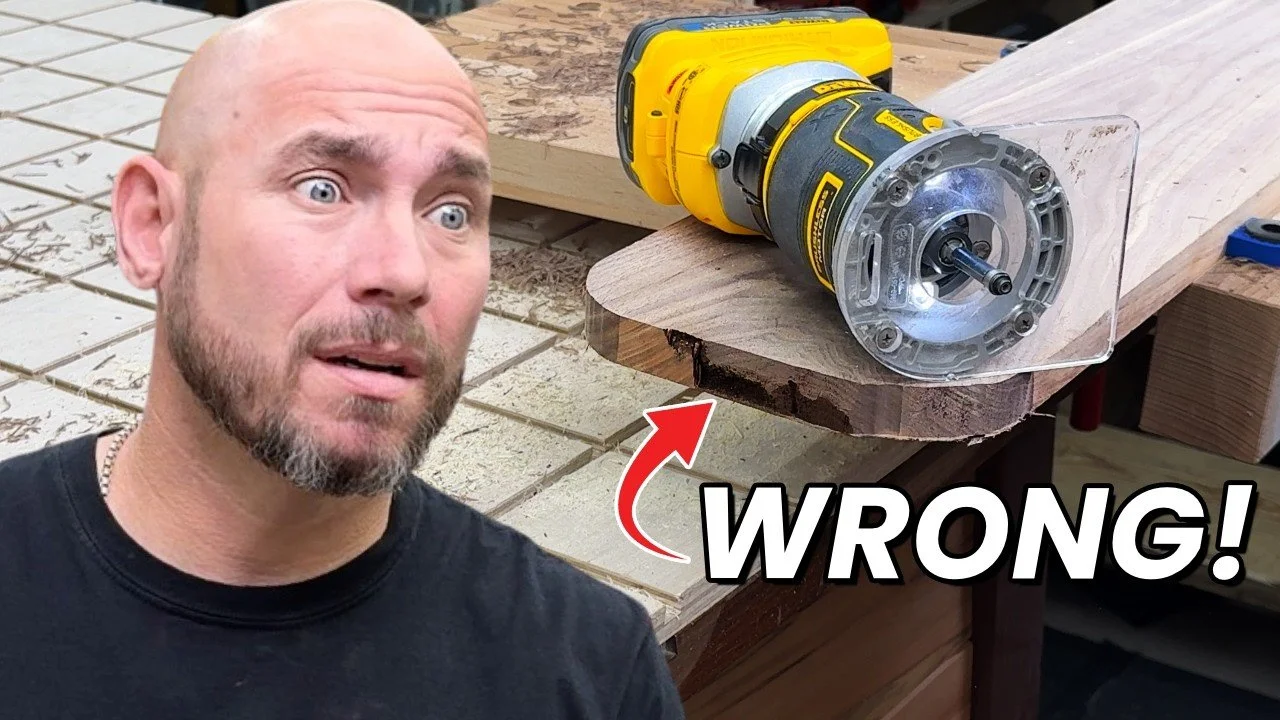
Today, I’m going to walk you through the five biggest mistakes beginners make, how to avoid them, and which routers and bits are actually worth your hard-earned money. Let’s go!
Affiliate Disclaimer:This post contains affiliate links, which means I may earn a small commission if you buy through them—at no extra cost to you. It helps keep the tool deals coming, so thanks for your support! Prices are valid at the time of posting but are subject to change at any time.
Watch The Full Youtube Video Here: NEVER Use a Router Like This (Most Beginners Do)
1. Routing in the Wrong Direction (The "Climb Cut" Trap)
The most common mistake beginners make is routing in the wrong direction, often called a climb cut. This is when the bit "climbs" up on the wood and takes off like a rocket. It’s essentially kickback, and it’s one of the things that confused me most when I started.
How to always get it right:
Use the "Winner" Sign Rule. Take your left hand and make an "L" shape.
Place your hand on the board.
Your index finger points in the direction you should move the router.
Outside Edges: Move counter-clockwise around the board.
Inside Edges: Move clockwise.
Pro Tip: Don’t Pause at the Corners
When you're moving around a board, it’s natural to want to slow down at the corners. Don't. That bit is spinning at thousands of RPMs; if you stop, it will burn the wood instantly.
To keep things steady and safe, I recommend using Bench Nuts or Bench Cookies. These are grippy foam pucks that keep your project stuck to the workbench so it doesn't slide around.
2. Poor Bit Installation and Maintenance
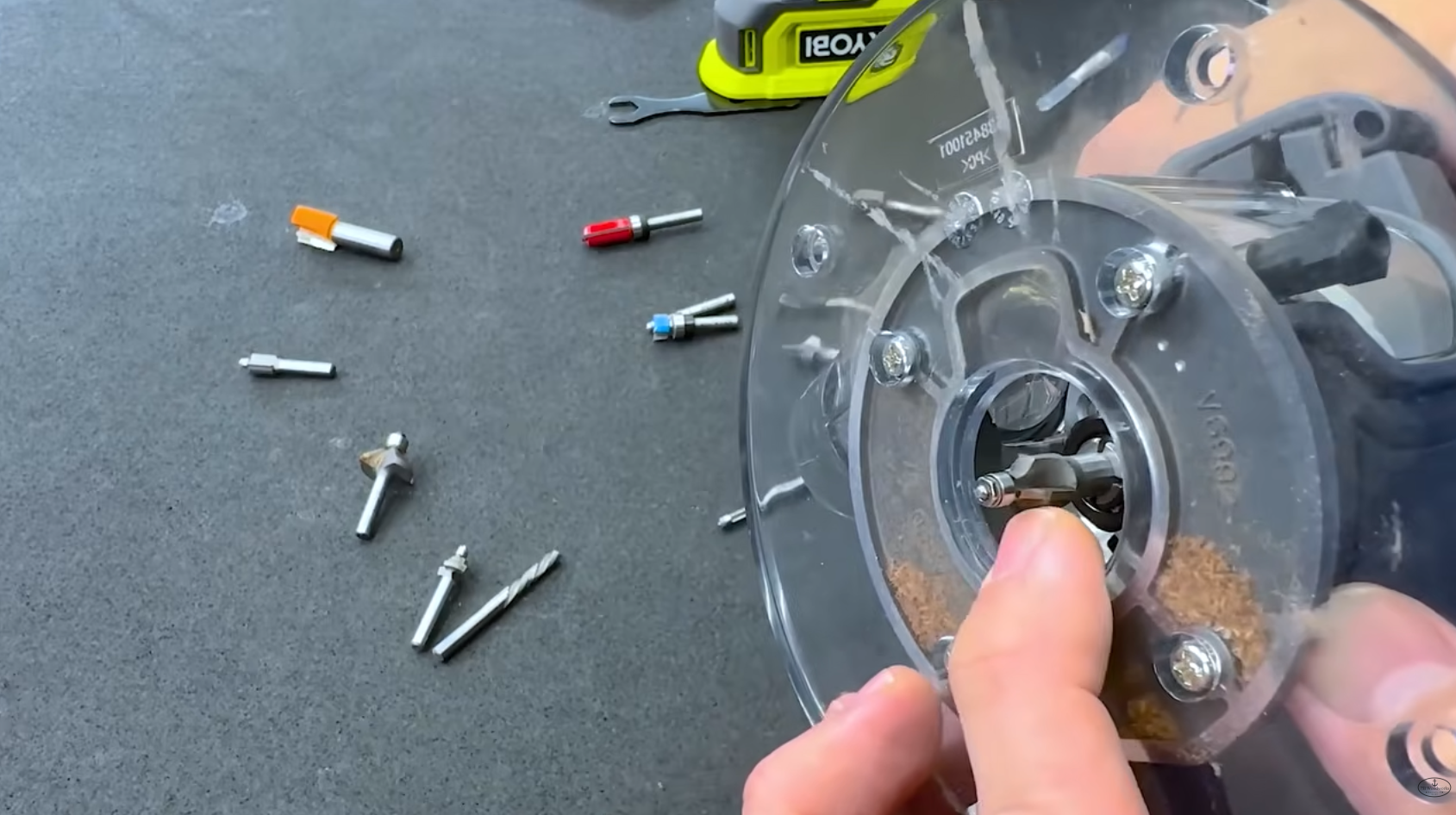
Mistake number two happens before you ever even turn the router on. Most "palm" or "trim" routers, like the Makita Trim Router or Bosch Trim Router, use a 1/4-inch collet. Larger routers can take both 1/4-inch and 1/2-inch shanks.
The Bottom-Out Rule: When installing a bit, push it all the way in until it bottoms out, then pull it back out slightly before tightening. This ensures the collet grips the straight part of the shank and not the flared area near the cutters.
Keep it Clean: Pitch and sap from wood gum up your bits, leading to burning and tear-out. Use Simple Greenand a nylon brush to keep them clean. A clean bit is a happy bit!
3. Taking Too Big of a "Bite"
Ever taken a giant bite of a sandwich at the airport right when someone recognizes you from the channel? It's embarrassing and hard to chew. The router is the same way!
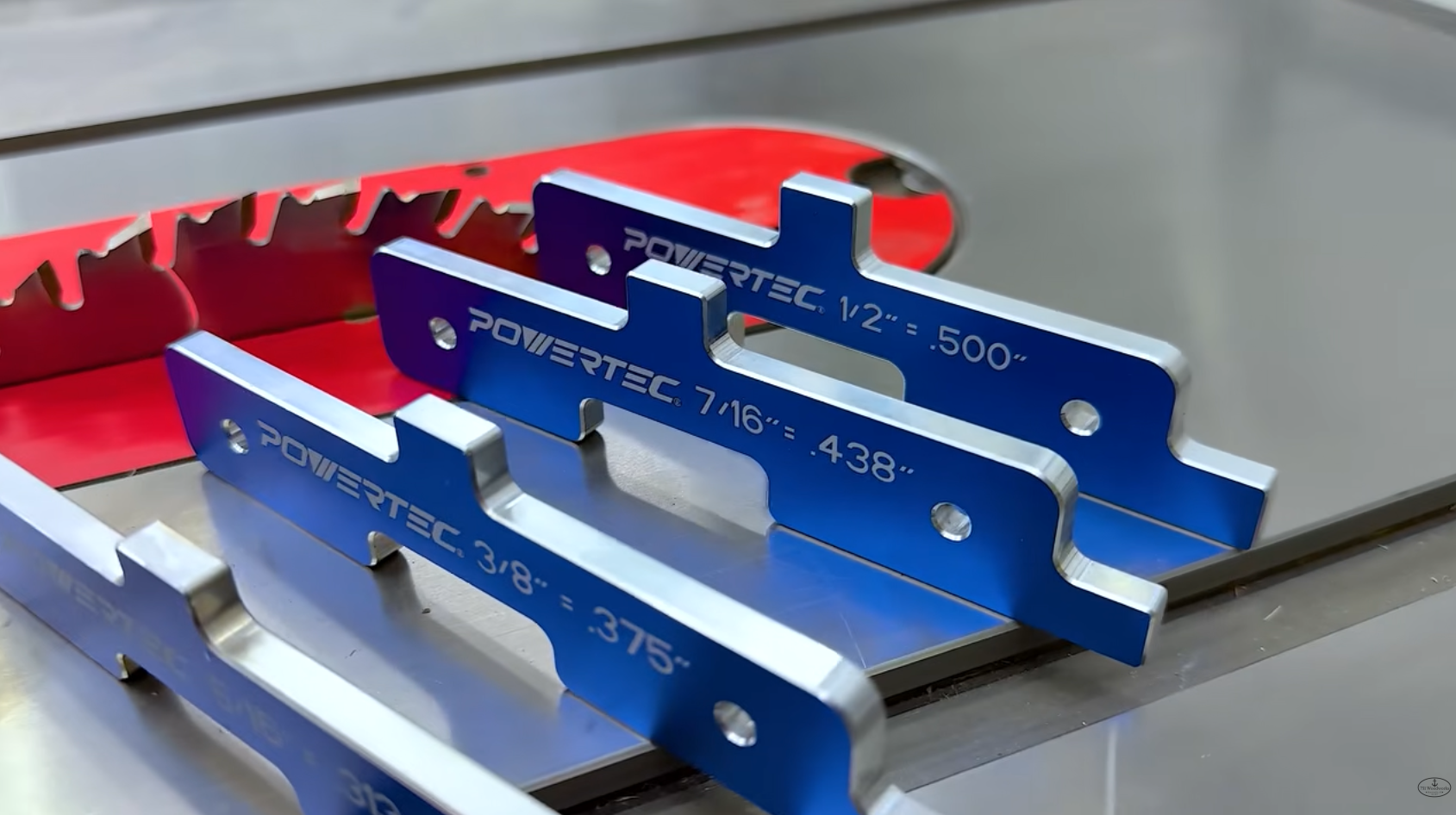
The Router Bit Rule of Thumb: Never cut deeper than half the width of your bit in a single pass.
If you're using a 1/2-inch straight bit, take passes that are 1/4-inch deep until you reach your final depth.
This protects your motor and helps your bits last longer. To set these depths accurately, use KREG Setup Bars, WEN Precision Router Set Up Bars, or Powertec Precision Router Set Up Bars.
4. Ignoring Variable Speed and Feed Rates
"Speed kills" applies to routing, too.
Rule of Thumb: The bigger the bit, the slower the speed. If you’re using a massive Dovetail Bit or a 3/4" straight bit, dial it down.
Listen to the Motor: If the router sounds like it’s struggling, you’re pushing too fast. High-powered options like the DEWALT 20v Plunge Router or the Makita 40v Plunge Router actually help manage this with better technology, but you still need to listen to the tool.
5. Buying the Wrong Bits (Or Too Many!)
One of the biggest mistakes you can make is buying a giant pack of 50 bits you’ll never use. Instead, invest in high-quality individuals or a focused set like the Whiteside 4pc Router Bit Set or the Bosch 6pc Router Bit Set.
The Starter Essentials:
Whiteside Roundover Bit: Great for softening edges.
Whiteside Chamfer Bit: For a clean, modern look.
Whiteside Flush Trim Bit: Essential for template work.
Microjig Grid Router Guide: A game-changer for control.
Which Router Should You Buy?
If you are already on a battery platform, stick with that for your trim router:
For heavy-duty cordless work, check out the Makita 40v Trim Router or the Milwaukee M18 Plunge Router. If you prefer corded power, you can’t go wrong with the Bosch 1617 Fixed and Plunge Base Router (or the Fixed Baseonly) and the DEWALT DW618 Fixed and Plunge Base Router (or Fixed Base only).
Shop Organization & Safety
Don't let your bits roll around in a drawer. Keep them safe in a Walnut Router Bit Tray, Rockler Router Bit Holders, or More Router Bit Trays.
And please, protect your ears! Routers are loud. I recommend 3M WorkTunes or IsoTunes Hearing Protection. For precise setups, the KREG Router Radius Guide is a handy addition to any shop.
Final Thoughts
Woodworking is about getting better one project at a time. Respect the tool, keep a firm grip, and don't rush. If you want to save money on your next tool purchase, sign up for my daily tool deals email here.
If you’re ready to take your woodworking more seriously, come join our Sawdust Startups community on Skool—we’d love to have you!


I stopped by the MicroJig booth and saw a router lift that tilts from -5 to 50 degrees, the new GRR-Ripper Air, and two new router bits. Here's what each one does and what it costs.